
This story was first published in digitalhealth.net

First electric emergency response vehicles for SCAS
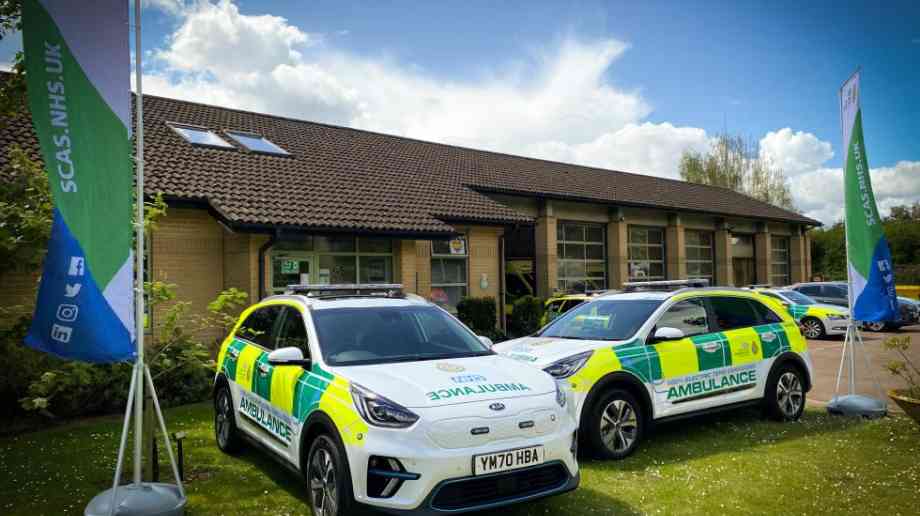
South Central Ambulance Service NHS Foundation Trust has launched the first fully electric emergency response vehicles into its vehicle fleet.
The two Kia e-Niro vehicles have been designed and adapted by South Central Fleet Services to contain all the equipment, medication and supplies to allow first responder paramedics from SCAS to reach patients quickly under emergency driving conditions – and generating zero emissions in the process.
SCAS began looking at electric vehicles over 18 months ago but at that time there were only a limited number of manufacturers in the market and the driving range of the models available wasn’t quite what was needed for an emergency response vehicle. Fast forward to 2021 and with a greater number of vehicles available for testing, combined with further advances in electric motoring technology, it became clear that everything the trust needed could now be delivered.
The Kia eNiro has a manufacturer’s driving range of up to 282 miles on a single charge – well within the estimated 90-100 miles that an emergency response vehicle will cover in an average 10-hour operational shift. Charging points are available at the trust’s ambulance stations, as well as local hospitals, so the vehicles can easily be topped up if needed whilst on standby.
Charles Porter, director of Finance at SCAS, said: “I am delighted that these first two fully electric, zero emission emergency response vehicles will shortly be introduced to our operational fleet. I would like to thank everyone in the project team for their determination and commitment to delivering this significant step in our strategy to continually reduce our environmental impact. As an organisation, we operate over 1,300 vehicles to deliver our services so being able to move to fully electric vehicles will be vital in order to deliver our environmental goals. We are key partners in national projects to deliver zero emission emergency vehicle fleets and we are already exploring how we can bring electric vehicles into our emergency ambulance and patient transport service operations.”
Latest News

16/02/2024 - 12:56
Hammersmith and Fulham Council has created a new alliance intended to clean dirty air and improve residents' health.

16/02/2024 - 10:44
Two million more GP appointments a month are being delivered for patients compared to the same month before the pandemic as part of the NHS primary care access recovery plan according to new NHS data.

15/02/2024 - 10:26
The Welsh Government has provided innovation funding of £380,000 to support two projects utilising technology in domiciliary care.

15/02/2024 - 10:13
The new Scottish health secretary has met with frontline staff at Queen Elizabeth University Hospital in Glasgow.

14/02/2024 - 10:27
The North East London NHS Foundation Trust (NELFT) has appointed three new Executive Directors to the Trust Board.
Product Features

UK Building Regulations highlight toxic gas and smoke from layers of paint built up over multiple redecorations as a major cause of permanent ill health or death in a building fire.
Their concern rose with discovery the flame retardant paints most widely used paint along escape routes have been ones which to this day counter-productively use emission of heavy toxic gas to smother flames which rapidly spread along walls if layers of paint delaminate in a fire.
Supplier Profiles

Northwich’s Victoria Infirmary (VIN) Community Diagnostic Centre (CDC) has enabled more patients

Adveco, the commercial hot water specialist, announces the launch of live metering of domestic ho
Latest Features

Sarah Greenslade, public affairs and communications officer at the British Parking Association looks at some of the problems and innovations in healthcare parking

It’s easy to assume that the comms team is there to handle press enquiries and the occasional social media storm – but the reality is that strategic communications can make a measurable impact across the entire organisation, from operational to financial, when done properly


