
This story was first published in digitalhealth.net

Target of women holding half of top jobs missed
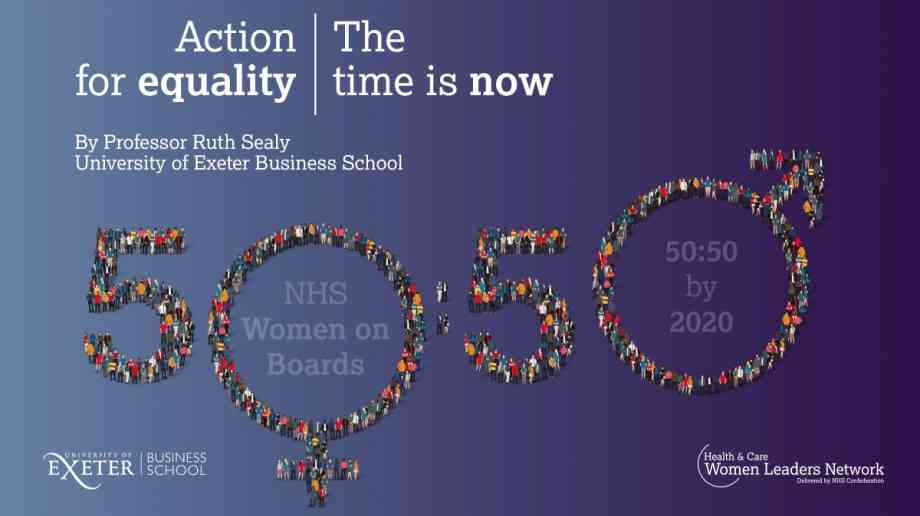
The NHS Confederation has stressed that NHS leadership that more fairly represents women in senior roles is ‘essential, overdue and needed now’.
A new report, Action for Equality: The Time is Now, has found that while progress has been made to increase the proportion of women in leadership roles across the health service, there is much more to do to meet the NHS’s target for 50:50 representation this year, as set by the NHS regulator in 2016.
The research, undertaken by the NHS Confederation’s Health and Care Women Leaders Network, found that fewer than half (44.7 per cent) of executive and non-executive roles across NHS trusts are held by women. Whilst this is an improvement from 39 per cent in 2017, it still falls short of the equality target set by the NHS, and is made up of ranging representation across the country - from as low as 15.4 per cent all the way up to 77.8 per cent.
The report also found variation in how women are represented in specific roles. For example, only one in four chief financial officers and nearly one in three of medical directors across the NHS are women. The greatest progress with female representation was found in non-executive roles, where more than two fifths are now women.
NHS Confederation says that women would need to be in an additional 150 executive and non-executive directorships, including 40 medical director and 50 chief finance officer roles across NHS trusts and arm’s-length bodies, to achieve the European Commission’s definition of gender balance of 40 to 60 per cent.
The Health and Care Women Leaders Network has made a number of recommendations in its report, including the need for chairs of NHS organisations to have explicit objectives to support diversity across their boards, and for clear succession plans to be set up to improve female representation, particularly in medical director and chief finance officer roles, with emerging leaders at mid and senior levels given the opportunity to experience board-level working.
Sam Allen, chair of the NHS Confederation’s Health and Care Women Leaders Network and chief executive of Sussex Partnership NHS Foundation Trust said: “It is well-established that boards that properly reflect the communities and staff they serve lead to stronger decision-making and better outcomes for patients.
“The NHS has made progress, but there remains much more for leaders to do in order to achieve consistent and meaningful gender balance. We must move away from the concept that gender balance is tokenistic or a ‘nice to have’, to something that is essential, overdue and needed now. This requires an inclusive and compassionate approach to leadership, with everyone in these vital positions held to account for their contributions.”
Latest News

16/02/2024 - 12:56
Hammersmith and Fulham Council has created a new alliance intended to clean dirty air and improve residents' health.

16/02/2024 - 10:44
Two million more GP appointments a month are being delivered for patients compared to the same month before the pandemic as part of the NHS primary care access recovery plan according to new NHS data.

15/02/2024 - 10:26
The Welsh Government has provided innovation funding of £380,000 to support two projects utilising technology in domiciliary care.

15/02/2024 - 10:13
The new Scottish health secretary has met with frontline staff at Queen Elizabeth University Hospital in Glasgow.

14/02/2024 - 10:27
The North East London NHS Foundation Trust (NELFT) has appointed three new Executive Directors to the Trust Board.
Product Features

UK Building Regulations highlight toxic gas and smoke from layers of paint built up over multiple redecorations as a major cause of permanent ill health or death in a building fire.
Their concern rose with discovery the flame retardant paints most widely used paint along escape routes have been ones which to this day counter-productively use emission of heavy toxic gas to smother flames which rapidly spread along walls if layers of paint delaminate in a fire.
Supplier Profiles

Northwich’s Victoria Infirmary (VIN) Community Diagnostic Centre (CDC) has enabled more patients

Adveco, the commercial hot water specialist, announces the launch of live metering of domestic ho
Latest Features

Sarah Greenslade, public affairs and communications officer at the British Parking Association looks at some of the problems and innovations in healthcare parking

It’s easy to assume that the comms team is there to handle press enquiries and the occasional social media storm – but the reality is that strategic communications can make a measurable impact across the entire organisation, from operational to financial, when done properly


