
This story was first published in digitalhealth.net

Sadiq Khan opens new ambulance training centre
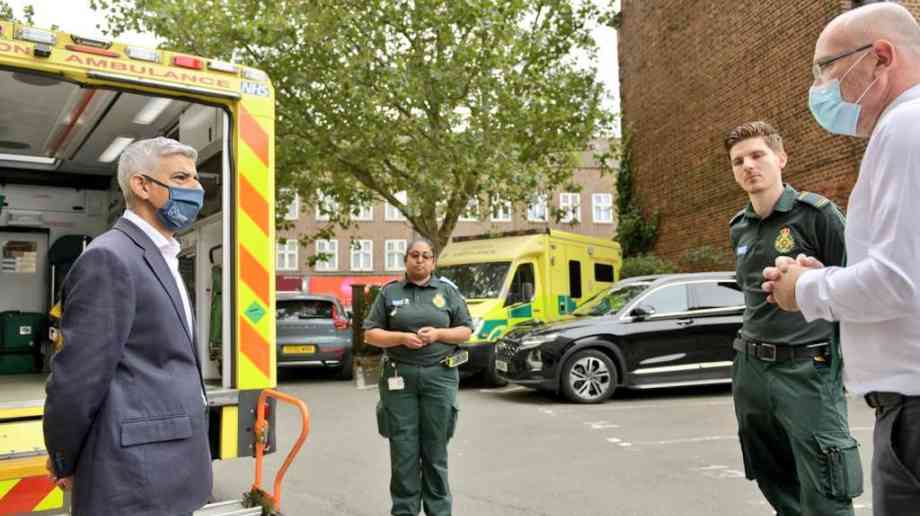
The Mayor of London has unveiled a new hi-tech training centre which will help enable London Ambulance Service to train more emergency call handlers.
The new training centre in Barking will help London Ambulance Service build greater capacity to take potentially life-saving calls as well as enhancing the NHS 111 service for east London.
By the end of 2020, 155 emergency call handlers will have trained at the new interactive 999 training centre and be ready to take emergency calls from the public. An additional 150 ambulances have also been added to the capital’s streets to help the service deal with the expected rise in demand in the months ahead.
Sadiq Khan said: “On behalf of all Londoners, I want to thank the paramedics, the emergency call handlers, the volunteers and all the staff at London Ambulance Service for their incredible service to our city throughout the biggest public health crisis we have seen in our lifetime. It has been one of the busiest periods in the service’s history and they have risen to the unprecedented challenge, putting the needs of Londoners ahead of their own so they could be there on the frontline when we needed them. We will never forget that.
“This new training centre will help boost the number of emergency call handlers in the months ahead, making it easier for Londoners to access urgent and emergency care. Our health services are planning for a busy winter but Londoners can play their part to ensure those who need it most get the right help. Anyone faced with a life-threatening emergency should of course continue to call 999 but if you are looking for reassurance or advice, please visit 111 online or book an appointment online with your GP. The only we can only control this virus if we work together.”
Garrett Emmerson, London Ambulance Service chief executive, said: “This new centre is a great illustration of how we have scaled up operations to meet the pressure created by the coronavirus pandemic while continuing to plan for the future and ensure we remain a world-class ambulance service.
“These safe, Covid-19 compliant facilities will hugely enhance our training for 999 and 111 call handlers and will also help staff meet the challenges of the winter months and any potential surges in Covid-19. We couldn’t have achieved any of this without personal sacrifices of our incredible staff and volunteers, as well as the generous collaboration of many of our partner organisations and I would like to thank them for their dedication.”
Latest News

16/02/2024 - 12:56
Hammersmith and Fulham Council has created a new alliance intended to clean dirty air and improve residents' health.

16/02/2024 - 10:44
Two million more GP appointments a month are being delivered for patients compared to the same month before the pandemic as part of the NHS primary care access recovery plan according to new NHS data.

15/02/2024 - 10:26
The Welsh Government has provided innovation funding of £380,000 to support two projects utilising technology in domiciliary care.

15/02/2024 - 10:13
The new Scottish health secretary has met with frontline staff at Queen Elizabeth University Hospital in Glasgow.

14/02/2024 - 10:27
The North East London NHS Foundation Trust (NELFT) has appointed three new Executive Directors to the Trust Board.
Product Features

UK Building Regulations highlight toxic gas and smoke from layers of paint built up over multiple redecorations as a major cause of permanent ill health or death in a building fire.
Their concern rose with discovery the flame retardant paints most widely used paint along escape routes have been ones which to this day counter-productively use emission of heavy toxic gas to smother flames which rapidly spread along walls if layers of paint delaminate in a fire.
Supplier Profiles

Northwich’s Victoria Infirmary (VIN) Community Diagnostic Centre (CDC) has enabled more patients

Adveco, the commercial hot water specialist, announces the launch of live metering of domestic ho
Latest Features

Sarah Greenslade, public affairs and communications officer at the British Parking Association looks at some of the problems and innovations in healthcare parking

It’s easy to assume that the comms team is there to handle press enquiries and the occasional social media storm – but the reality is that strategic communications can make a measurable impact across the entire organisation, from operational to financial, when done properly


