
This story was first published in digitalhealth.net

NHS adopts Google/Apple framework for Covid-19 app
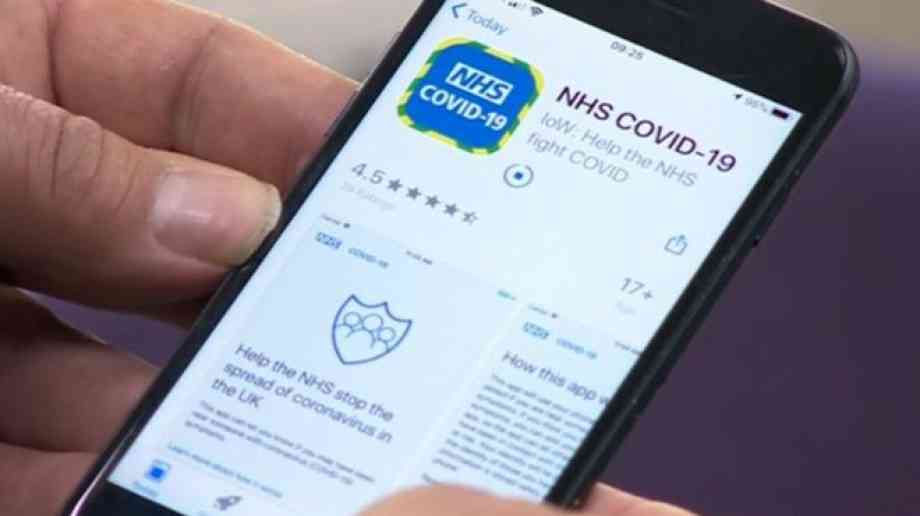
The government has announced the next phase of development in building an app that supports the end-to-end NHS Test and Trace service.
The next phase will bring together the work done so far on the NHS Covid-19 app and the new Google/Apple framework. Following rigorous field testing and a, now seemingly unsuccessful trial on the Isle of Wight, the Department of Health and Social Care has identified challenges with both the app and the Google/Apple framework.
The government will now be taking forward a solution that brings together the work on its app and the Google/Apple solution, which will enable ministers 'to develop an app that will bring together the functionality required to carry out contact tracing', whilst also making it easy to order tests, and access proactive advice and guidance to aid self-isolation.
The announcement is widely being seen as a major setback for the competence of the app and its progress. After a trial on the Isle of Wight at the start of May, the contact-tracing app was meant to be rolled out to the rest of England by the middle of that month, before it was swiftly moved to some time in June. It was only recently revealed that the app would not be ready and fully functional until the winter. Now officials have decided to ditch the app entirely in its current form.
DHSC has spent three months and millions of pounds on technology that experts had repeatedly warned would not work, and now the NHS will switch to an alternative designed by the US tech companies Apple and Google, which is also months away from being ready.
The previous, centralised version of the untested technology planned to use anonymised data from people who reported feeling ill was held in an NHS database to enable better tracing and data analysis. This version was not supported by Apple and Google and, the Isle of Wight trial indicates that the app only recognised four per cent of Apple phones and 75 per cent of Google Android devices.
A joint statement from Baroness Dido Harding, executive chair of NHS Test and Trace, and Matthew Gould, CEO of NHSX, reads: "Three weeks ago we launched NHS Test and Trace as a brand new, end-to-end service, to help control the spread of Covid-19 and we are hugely grateful for the way the public have responded to protect those around them. Our ambition is to develop an app which will enable anyone with a smartphone to engage with every aspect of the NHS Test and Trace service, from ordering a test through to accessing the right guidance and advice. This will support our vision of helping more people get back to the most normal life possible at the lowest risk.
"Our response to this virus has and will continue to be as part of an international effort. That is why as part of a collaborative approach we have agreed to share our own innovative work on estimating distance between app users with Google and Apple, work that we hope will benefit others, while using their solution to address some of the specific technical challenges identified through our rigorous testing.
"We will also draw on the invaluable insight from all of those who trialled the app on the Isle of Wight – and the brilliant teams who have worked on it to date – to build an app that can form part of the end-to-end NHS Test and Trace service, and this insight will be integral to the next phase of development. Crucially, NHS Test and Trace is already playing a vital role in helping us stop the spread of the virus. We will keep learning, improving and refining to build a high-quality service on which all of us can depend and to have the right technology in place."
Health and Social Care Secretary Matt Hancock said: "We knew from the start that we would need to test and learn as we developed this new technology. The NHS Covid-19 app has undergone some of the most rigorous testing in the world – utilising a real world trial on the Isle of Wight pilot and in a series of field tests – and I want to thank all of those involved.
"As we enter this next phase of research and development we remain determined to continue in our ambition to develop an app which meets the technical, security and user needs of the public and which can complement the NHS Test and Trace service.
"Countries across the globe have faced challenges in developing an app which gets all of these elements right, but through ongoing international collaboration we hope to learn, improve and find a solution which will strengthen our global response to this virus."
Silkie Carlo, the director of the privacy charity Big Brother Watch, said: “This just shows what a mess the centralised data-hungry approach was. Government was wrong to waste precious time and millions of pounds of public money on a design that everyone warned was going to fail, and now we’re back at square one.”
Latest News

16/02/2024 - 12:56
Hammersmith and Fulham Council has created a new alliance intended to clean dirty air and improve residents' health.

16/02/2024 - 10:44
Two million more GP appointments a month are being delivered for patients compared to the same month before the pandemic as part of the NHS primary care access recovery plan according to new NHS data.

15/02/2024 - 10:26
The Welsh Government has provided innovation funding of £380,000 to support two projects utilising technology in domiciliary care.

15/02/2024 - 10:13
The new Scottish health secretary has met with frontline staff at Queen Elizabeth University Hospital in Glasgow.

14/02/2024 - 10:27
The North East London NHS Foundation Trust (NELFT) has appointed three new Executive Directors to the Trust Board.
Product Features

UK Building Regulations highlight toxic gas and smoke from layers of paint built up over multiple redecorations as a major cause of permanent ill health or death in a building fire.
Their concern rose with discovery the flame retardant paints most widely used paint along escape routes have been ones which to this day counter-productively use emission of heavy toxic gas to smother flames which rapidly spread along walls if layers of paint delaminate in a fire.
Supplier Profiles

Northwich’s Victoria Infirmary (VIN) Community Diagnostic Centre (CDC) has enabled more patients

Adveco, the commercial hot water specialist, announces the launch of live metering of domestic ho
Latest Features

Sarah Greenslade, public affairs and communications officer at the British Parking Association looks at some of the problems and innovations in healthcare parking

It’s easy to assume that the comms team is there to handle press enquiries and the occasional social media storm – but the reality is that strategic communications can make a measurable impact across the entire organisation, from operational to financial, when done properly


