
This story was first published in digitalhealth.net

Treatment funded for rare muscle-wasting condition
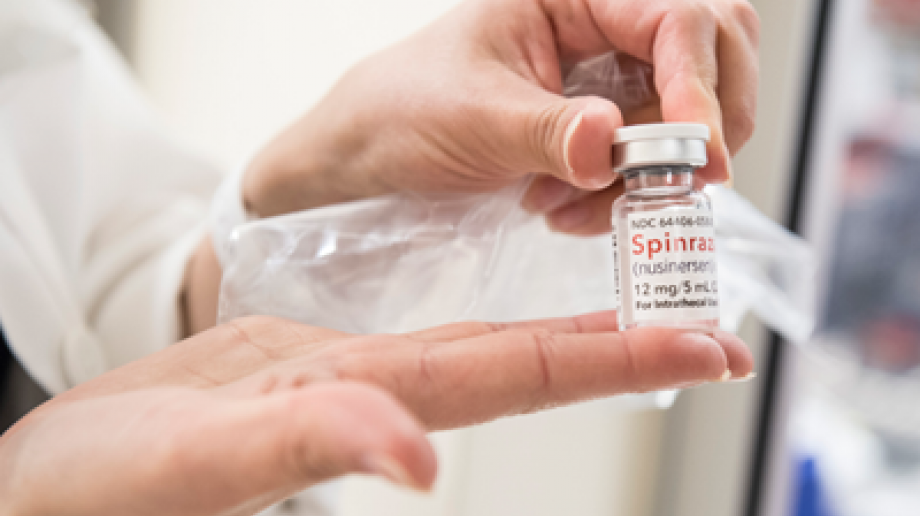
NHS England will provide a promising new treatment which can prolong the lives of children with a rare genetic condition after negotiating a deal with the manufacturer.
Nusinersen is the first treatment that targets the underlying cause of spinal muscular atrophy (SMA), which affects the nerves in the spinal cord, making muscles weaker and causing problems with movement, breathing and swallowing.
Where it develops in babies and toddlers, it can significantly reduce life expectancy, with data showing that there are between 600 and 1,200 children and adults currently living with the condition in England and Wales.
Trials have shown that nusinersen can slow the effects of SMA in some cases, allowing babies and toddlers to develop stronger muscles and survive for longer without breathing support. It is, however, not a cure.
Working with NICE, NHS England has now successfully negotiated a deal with Biogen, meaning that this treatment will be available for those whose clinicians think they would benefit. NICE has previously not been able to recommend nusinersen for routine use because of uncertainties over its long-term effectiveness and its high cost.
Simon Stevens, NHS England chief executive, said: “This promising treatment has the potential to be life changing for children and their families. The NHS has now reached one of the most comprehensive deals in the world, which allows us to assess real-world evidence of its long term benefits.
“This latest deal coming on the heels of a number of other recent successful negotiations demonstrates that there is no reason for other companies not to show equivalent flexibility in order to benefit NHS patients, taxpayers and indeed themselves.”
Meindert Boysen, director of the Centre for Health Technology Evaluation at NICE, said: “We are very pleased that we can now recommend Spinraza for people with SMA. The committee has recognised that Spinraza is a promising treatment that has been shown to improve a range of outcomes important to patients. But it also recognised that there are significant uncertainties, particularly around its long-term benefits.
“All along we have felt it important to give all parties every opportunity to try to find a way to mitigate these uncertainties in order to make Spinraza available to patients in England. Today’s announcement shows that, where companies show appropriate flexibility, it is possible to find a way to provide important treatments to patients in a way that is cost effective for the NHS and taxpayers.”
Latest News

16/02/2024 - 12:56
Hammersmith and Fulham Council has created a new alliance intended to clean dirty air and improve residents' health.

16/02/2024 - 10:44
Two million more GP appointments a month are being delivered for patients compared to the same month before the pandemic as part of the NHS primary care access recovery plan according to new NHS data.

15/02/2024 - 10:26
The Welsh Government has provided innovation funding of £380,000 to support two projects utilising technology in domiciliary care.

15/02/2024 - 10:13
The new Scottish health secretary has met with frontline staff at Queen Elizabeth University Hospital in Glasgow.

14/02/2024 - 10:27
The North East London NHS Foundation Trust (NELFT) has appointed three new Executive Directors to the Trust Board.
Product Features

UK Building Regulations highlight toxic gas and smoke from layers of paint built up over multiple redecorations as a major cause of permanent ill health or death in a building fire.
Their concern rose with discovery the flame retardant paints most widely used paint along escape routes have been ones which to this day counter-productively use emission of heavy toxic gas to smother flames which rapidly spread along walls if layers of paint delaminate in a fire.
Supplier Profiles

Northwich’s Victoria Infirmary (VIN) Community Diagnostic Centre (CDC) has enabled more patients

Adveco, the commercial hot water specialist, announces the launch of live metering of domestic ho
Latest Features

Sarah Greenslade, public affairs and communications officer at the British Parking Association looks at some of the problems and innovations in healthcare parking

It’s easy to assume that the comms team is there to handle press enquiries and the occasional social media storm – but the reality is that strategic communications can make a measurable impact across the entire organisation, from operational to financial, when done properly


