
This story was first published in digitalhealth.net

Hospital celebrates first robot-guided knee surgery
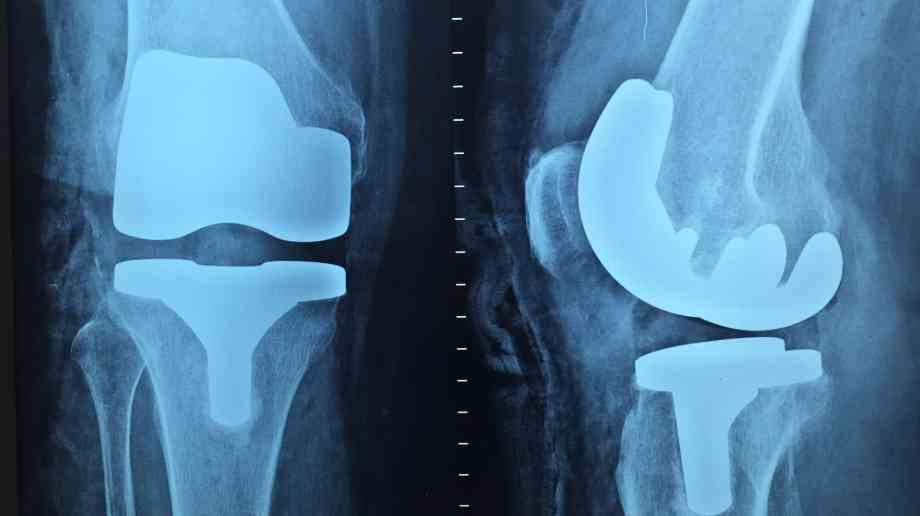
Chelsea and Westminster Hospital NHS Foundation Trust has carried out its first robotic-assisted total knee replacement operation at the West Middlesex University Hospital.
Part of a three month trial, the results of the new procedure will be monitored to see how they compare to existing techniques to find out whether the new procedure will get patients back on their feet sooner.
Dr Arjuna Imbuldeniya, consultant surgeon in Trauma and Orthopaedics, performed the successful operation on a 77-year-old patient on 21 February. Using a mini semi-active robotic burr, the new surgery enables surgeons to carry out more accurate and effective knee replacements with minimal invasion, speeding up recovery time, reducing post-operative pain and increasing the longevity of the implants.
Imbuldeniya said: “Total knee replacement surgery globally has an 80 per cent satisfaction rate amongst patients. There is a growing consensus that utilising computer and robotic technology to help perform bespoke and precise placement of the implants to 0.1 of a millimetre or degree, might help us achieve excellent results in more of our patients. Computer and robotic assisted surgery is very exciting, both for me using it and for the patients who will benefit from the latest technology.
“When I first qualified as a surgeon, patients typically took a week to a week and a half to get back on their feet after having a knee replacement. This has come down to just few days recently, and the robotic technology will help patients get home even faster—as soon as a day or two after the operation. Another key benefit is that by being so precise with a knee replacement, it will last much longer and can be tailored to the unique anatomy of each patient. This is so important now as we see younger and younger people requiring this procedure.”
Latest News

16/02/2024 - 12:56
Hammersmith and Fulham Council has created a new alliance intended to clean dirty air and improve residents' health.

16/02/2024 - 10:44
Two million more GP appointments a month are being delivered for patients compared to the same month before the pandemic as part of the NHS primary care access recovery plan according to new NHS data.

15/02/2024 - 10:26
The Welsh Government has provided innovation funding of £380,000 to support two projects utilising technology in domiciliary care.

15/02/2024 - 10:13
The new Scottish health secretary has met with frontline staff at Queen Elizabeth University Hospital in Glasgow.

14/02/2024 - 10:27
The North East London NHS Foundation Trust (NELFT) has appointed three new Executive Directors to the Trust Board.
Product Features

UK Building Regulations highlight toxic gas and smoke from layers of paint built up over multiple redecorations as a major cause of permanent ill health or death in a building fire.
Their concern rose with discovery the flame retardant paints most widely used paint along escape routes have been ones which to this day counter-productively use emission of heavy toxic gas to smother flames which rapidly spread along walls if layers of paint delaminate in a fire.
Supplier Profiles

Northwich’s Victoria Infirmary (VIN) Community Diagnostic Centre (CDC) has enabled more patients

Adveco, the commercial hot water specialist, announces the launch of live metering of domestic ho
Latest Features

Sarah Greenslade, public affairs and communications officer at the British Parking Association looks at some of the problems and innovations in healthcare parking

It’s easy to assume that the comms team is there to handle press enquiries and the occasional social media storm – but the reality is that strategic communications can make a measurable impact across the entire organisation, from operational to financial, when done properly


