
This story was first published in digitalhealth.net

Health Education England to ‘future-proof’ NHS
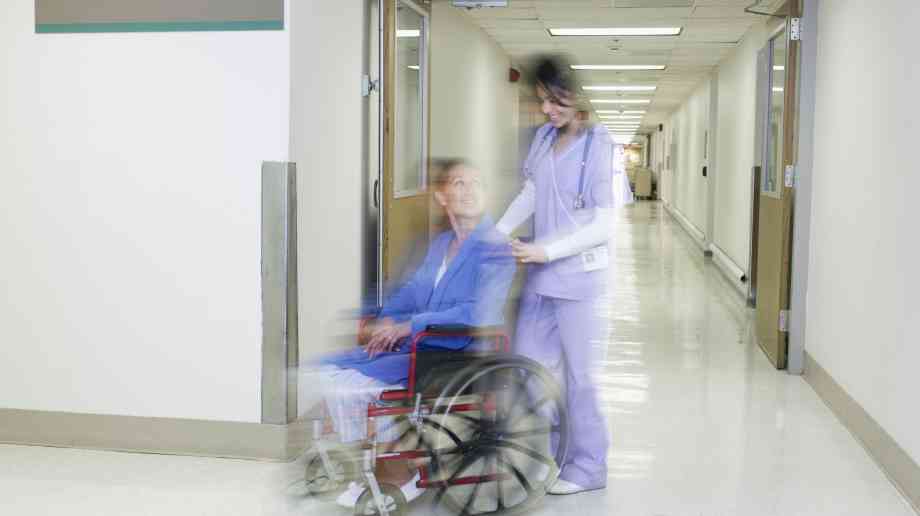
The NHS needs to ‘future-proof’ its care workforce by improving working conditions, boosting training and retention and becoming a ‘model employer’ for staff, a report has said.
Facing the Facts, Shaping the Future, A health and care workforce strategy for England to 2027, produced by Health Education England, is a whole national system consultation document. It contains content from NHS England, NHS Improvement, Public Health England, the Care Quality Commission, National Institute for Clinical Excellence and Department of Health.
The draft strategy takes an uncompromising look at the challenges faced by the health care system, charting the growth in the NHS workforce over the last five years while setting out the critical workforce challenges that will be faced over the next decade.
The strategy is a draft document with a number of areas to be consulted upon.
Though the NHS is employing more staff now than at any time in its history, the report concludes that more must be done to keep up with increased demand a the population expands and grows older.
It responds by setting out a range of measures to improve productivity, boost training and retention, open up new routes into nursing and prepare the future workforce for technological advances which are poised to transform modern medicine.
Among the specific measures are: targeted retention schemes to encourage staff to continue working in healthcare; improvements to medical training and how junior doctors are supported in their careers; a far-reaching technology review across England; and making the NHS a more inclusive, ‘family-friendly’ employer.
The draft strategy looks at the major workforce plans for the Five Year Forward View priorities: cancer; mental health; maternity; primary and community care; and urgent and emergency care.
While acknowledging increasing demand from patients and increasing pressure on NHS staff, and the fact that up to 42,000 posts in nursing, midwifery and the allied health professions are not currently filled by substantively employed staff, it also reveals that: the number of clinicians substantively employed since 2012 has risen by 40,000, a rise of over seven per cent; there has been an unprecedented programme of expansion in training over the past three years; medical and nursing undergraduate places will both rise by 25 per cent; we are now seeing the highest-ever number of people entering GP training in the history of the NHS; NHS workforce vacancies reduced by up to 15 per cent during 2016/17; and this reduction, combined with successful measures to control agency spending, has released £700 million in savings for the service.
The new ten-year forward look shows that if no further action is taken to reduce demand through prevention, productivity and service transformation, the NHS will need to grow by 190,000 posts by 2027 to meet demand.
Ian Cumming, chief executive of Health Education England, said: “Continuing with a business as usual approach to workforce planning is no longer sustainable. There needs to be a major shift in the ways we plan in order to make sure we can meet the health needs of the country’s diverse and growing population in the future.
“The report tells us there are some areas of strength, 6,000 more staff working in primary care, the highest-ever number of people entering GP training in the history of the NHS. However, increasing the workforce alone is not the only answer, we need to look at ways to tackle the number of vacancies and staff leaving the profession.”
Jeremy Hunt, Health Secretary, said: “NHS staff are our health service’s greatest asset, but for too long, Governments of all parties have taken a short-termist approach to NHS workforce planning. We need a proper plan that stretches beyond any electoral cycle, and secures the supply of NHS staff for future generations. This important work kickstarts that process.”
Malcolm Grant, NHS England, said: “I very much welcome the publication of this draft strategy. We need to ensure the future health and social care workforce can meet the needs of a diverse and ageing population and I look forward to contributing to the consultation.”
Duncan Selbie, chief executive of Public Health England, said: “Helping people to stay well for longer and to stay in their own homes for as long as possible is dependent on investment in a confident and forward facing health and care workforce and this consultation is a big step on the way to securing this.”
Latest News

16/02/2024 - 12:56
Hammersmith and Fulham Council has created a new alliance intended to clean dirty air and improve residents' health.

16/02/2024 - 10:44
Two million more GP appointments a month are being delivered for patients compared to the same month before the pandemic as part of the NHS primary care access recovery plan according to new NHS data.

15/02/2024 - 10:26
The Welsh Government has provided innovation funding of £380,000 to support two projects utilising technology in domiciliary care.

15/02/2024 - 10:13
The new Scottish health secretary has met with frontline staff at Queen Elizabeth University Hospital in Glasgow.

14/02/2024 - 10:27
The North East London NHS Foundation Trust (NELFT) has appointed three new Executive Directors to the Trust Board.
Product Features

UK Building Regulations highlight toxic gas and smoke from layers of paint built up over multiple redecorations as a major cause of permanent ill health or death in a building fire.
Their concern rose with discovery the flame retardant paints most widely used paint along escape routes have been ones which to this day counter-productively use emission of heavy toxic gas to smother flames which rapidly spread along walls if layers of paint delaminate in a fire.
Supplier Profiles

Northwich’s Victoria Infirmary (VIN) Community Diagnostic Centre (CDC) has enabled more patients

Adveco, the commercial hot water specialist, announces the launch of live metering of domestic ho
Latest Features

Sarah Greenslade, public affairs and communications officer at the British Parking Association looks at some of the problems and innovations in healthcare parking

It’s easy to assume that the comms team is there to handle press enquiries and the occasional social media storm – but the reality is that strategic communications can make a measurable impact across the entire organisation, from operational to financial, when done properly


