
This story was first published in digitalhealth.net

Hunt orders NHS England bosses to stick to waiting time limits
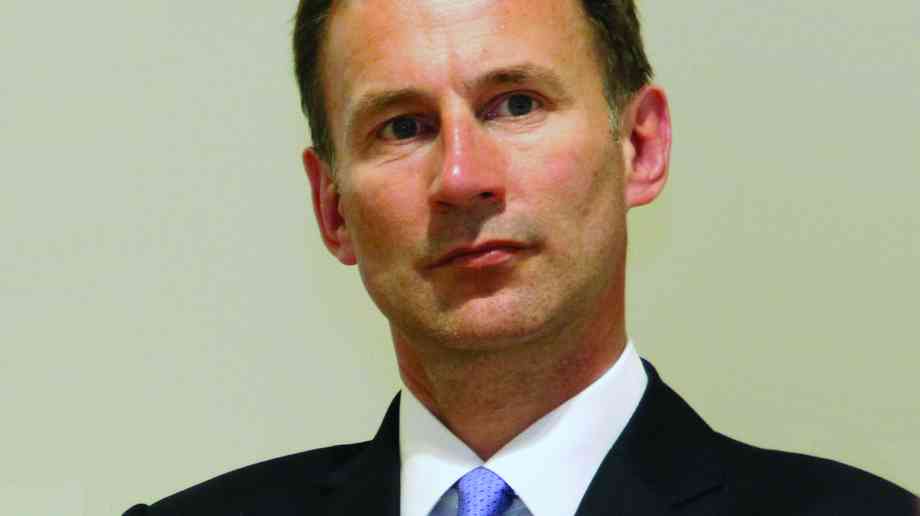
The Health Secretary has rejected service chiefs’ public warning that meeting targets is impossible without current funding, and has ordered them to stick to waiting time limits.
NHS England told ministers it would not be able to guarantee waiting times and would delay patients new drugs next year because of lack of funding, following the Budget.
The Health Secretary has rejected these proposals and signalled the start of months of difficult negotiations over what care the NHS can and cannot afford to provide in 2018-19.
NHS England used its board meeting to warn that it had to make ‘difficult choices’ next year that would involve limiting what it could provide for patients. It blamed the Chancellor for creating what the Patients Association said was an ‘extraordinary’ situation by giving it only £1.6 billion extra funding for 2018-19 in his budget last year, less than half of the £4 billion Simon Stevens called for.
NHS England made plans to stop prescribing cough mixture, cold treatments, eye drops and laxatives, which it wants patients to buy over the counter instead, as well as fish oil, herbal remedies and homeopathy, as part of a plan to save up to £190 million from its £9.2 billion bill for prescribed medications.
It also said it may refuse to act on new guidance from the National Institute for Health and Clinical Excellence (NICE) if it believed it did not have the money or staff to implement them. That could lead to England’s 209 NHS clinical commissioning groups refusing to pay for new drugs that NICE has deemed value for money for the NHS or declining to change practice as a result of guidelines that NICE issues to promote better care.
NHS England dismissed the idea that the service could be expected to provide even more care at a time when its annual budget increases of one to two per cent were far smaller than rises in patient demand, running at up to seven per cent a year.
Patient groups and medical organised were alarmed by NHS England’s threats.
Rachel Power, chief executive of the Patients Association, said: “It made clear how patients will lose out as a result of political decisions about the funding of health and social care. There will be longer waits for elective surgery, and therefore more pain and worse outcomes for many. NHS England has also said it is unable to implement best practice as advised by Nice on a routine basis – an extraordinary state of affairs. We have now reached a point where the NHS constitution will be routinely breached and NHS services are being withdrawn.”
Chaand Nagpaul, chair of the British Medical Association, said it was ‘deeply worrying that the body with responsibility for running the NHS is warning of the service’s inability to meet national standards of care. Unfortunately, it is patients who are unfairly suffering the consequences of a clearly underfunded service. Doctors can’t continuously plug gaps by penny pinching and poaching from elsewhere in an overstretched service’.
Derek Alderson, president of the Royal College of Surgeons, said: “Rationing and delaying surgical treatment are false economies. For example, current commissioning group policies designed to delay surgical access for obese patients and smokers only defers treatment and potentially adds costs through increased use of painkillers, physiotherapy and welfare support for out-of-work patients.”
Latest News

16/02/2024 - 12:56
Hammersmith and Fulham Council has created a new alliance intended to clean dirty air and improve residents' health.

16/02/2024 - 10:44
Two million more GP appointments a month are being delivered for patients compared to the same month before the pandemic as part of the NHS primary care access recovery plan according to new NHS data.

15/02/2024 - 10:26
The Welsh Government has provided innovation funding of £380,000 to support two projects utilising technology in domiciliary care.

15/02/2024 - 10:13
The new Scottish health secretary has met with frontline staff at Queen Elizabeth University Hospital in Glasgow.

14/02/2024 - 10:27
The North East London NHS Foundation Trust (NELFT) has appointed three new Executive Directors to the Trust Board.
Product Features

UK Building Regulations highlight toxic gas and smoke from layers of paint built up over multiple redecorations as a major cause of permanent ill health or death in a building fire.
Their concern rose with discovery the flame retardant paints most widely used paint along escape routes have been ones which to this day counter-productively use emission of heavy toxic gas to smother flames which rapidly spread along walls if layers of paint delaminate in a fire.
Supplier Profiles

Northwich’s Victoria Infirmary (VIN) Community Diagnostic Centre (CDC) has enabled more patients

Adveco, the commercial hot water specialist, announces the launch of live metering of domestic ho
Latest Features

Sarah Greenslade, public affairs and communications officer at the British Parking Association looks at some of the problems and innovations in healthcare parking

It’s easy to assume that the comms team is there to handle press enquiries and the occasional social media storm – but the reality is that strategic communications can make a measurable impact across the entire organisation, from operational to financial, when done properly


