
This story was first published in digitalhealth.net

Patients waiting for planned NHS surgery top four million for first time in 10 years
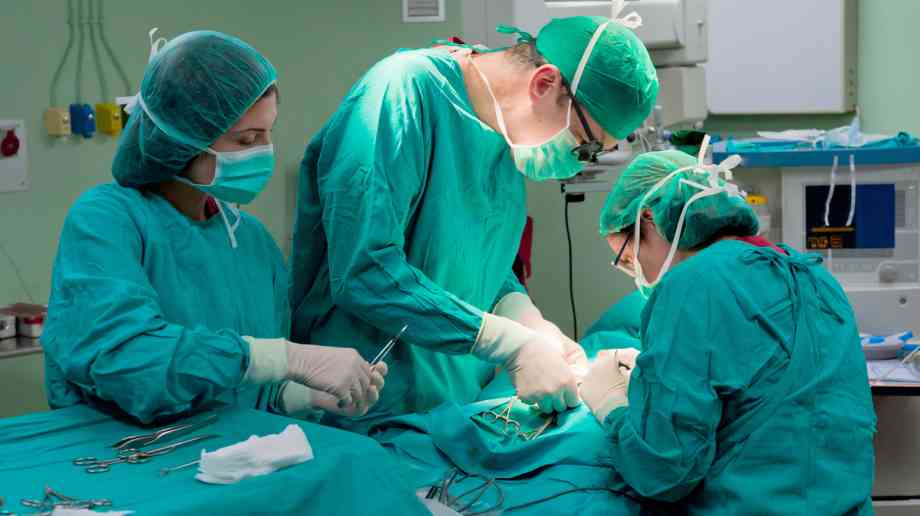
The number of patients waiting for planned surgery in an NHS hospital in England has exceeded four million for the first time in a decade, official figures show.
The breaching of the four million barrier for the first time since the introduction of the waiting time target in August 2007 will be seized by critics as evidence that Theresa May is giving the NHS too little money to help it cope with an increasing rise in demand for healthcare.
NHS England has said that 3.83 million people were on the waiting kist for non-urgent hospital care in July, a slight increase from 3.81 million in June. However, it admitted that once estimates were factored in for how many patients were waiting at six hospital trusts that did not submit data for the referral to treatment (RTT) scheme, the total had gone over four million.
Patients should wait no longer than 18 weeks after being referred for planned care in hospital, usually an operation, often non-urgent such as a hernia repair, under RTT.
Labour introduced the 18-week waiting time target in an attempt to stop patients waiting unduly long for surgery. In the first month the total number was 4.186 million. It then quickly went down to over three million, and then over two.
However, it hit three million again in April 2014 and started creeping up towards four million from mid-2016.
The total of four million comes after the controversial decision of the NHS England chief executive in March to relax the requirement for hospitals to treat at least 92 per cent of patients on the RTT waiting list within 18 weeks, which the Royal College of Surgeons and other medical groups said would leave patients waiting longer in pain and anxiety for their procedure.
Dr Mark Holland, the president of the Society for Acute Medicine, said: “This shocking figure is another damning indictment of the crisis we are experiencing in the NHS and is another example of how every unresolved problem impacts on another area.
“It is a fact that the NHS has less beds than other health economies and it is a fact that we have a workforce crisis. We need these problems to be addressed and to do this we need a proper strategic plan. I anticipate that today we will hear the usual defence rhetoric when the truth is that one of the richest nations on the planet is consistently failing to deliver care in line with its own standard.”
John Appleby, director of research and chief economist at the Nuffield Trust health thinktank, said: “These figures show that the NHS continues to be systematically unable to meet its main targets, with over four million patients likely to be on the waiting list for planned care, now at its longest since the end of 2007.
“For the second year in a row, even the summer respite in A&E has not led to hospitals being able to meet their four-hour target, with just 90.3 per cent of people being treated in four hours compared to the expected 95 per cent. The troublingly high rate of patients being held up leaving hospital is showing little sign of coming back under control, with delayed days at their highest ever level for the month of June.
“This puts the NHS on the back foot as we approach winter, with problems both at the ‘front door’ of A&E departments and at the ‘back door’, as hospitals struggle to send people home or on to further care.”
Latest News

16/02/2024 - 12:56
Hammersmith and Fulham Council has created a new alliance intended to clean dirty air and improve residents' health.

16/02/2024 - 10:44
Two million more GP appointments a month are being delivered for patients compared to the same month before the pandemic as part of the NHS primary care access recovery plan according to new NHS data.

15/02/2024 - 10:26
The Welsh Government has provided innovation funding of £380,000 to support two projects utilising technology in domiciliary care.

15/02/2024 - 10:13
The new Scottish health secretary has met with frontline staff at Queen Elizabeth University Hospital in Glasgow.

14/02/2024 - 10:27
The North East London NHS Foundation Trust (NELFT) has appointed three new Executive Directors to the Trust Board.
Product Features

UK Building Regulations highlight toxic gas and smoke from layers of paint built up over multiple redecorations as a major cause of permanent ill health or death in a building fire.
Their concern rose with discovery the flame retardant paints most widely used paint along escape routes have been ones which to this day counter-productively use emission of heavy toxic gas to smother flames which rapidly spread along walls if layers of paint delaminate in a fire.
Supplier Profiles

Northwich’s Victoria Infirmary (VIN) Community Diagnostic Centre (CDC) has enabled more patients

Adveco, the commercial hot water specialist, announces the launch of live metering of domestic ho
Latest Features

Sarah Greenslade, public affairs and communications officer at the British Parking Association looks at some of the problems and innovations in healthcare parking

It’s easy to assume that the comms team is there to handle press enquiries and the occasional social media storm – but the reality is that strategic communications can make a measurable impact across the entire organisation, from operational to financial, when done properly


