
This story was first published in digitalhealth.net

New national academy for social prescribing established
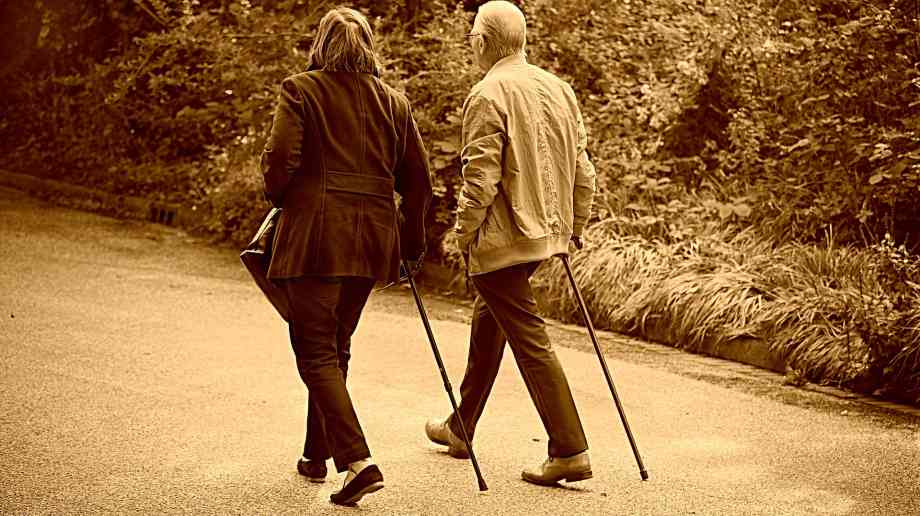
Health Secretary Matt Hancock is setting out his ambition for every patient in the country to have access to social prescribing schemes on the NHS as readily as they do medical care.
As part of this, the Department of Health and Social Care has set up a National Academy for Social Prescribing. Amongst its responsibilities, it will work to: standardise the quality and range of social prescribing available to patients across the country; increase awareness of the benefits of social prescribing by building and promoting the evidence base; develop and share best practice, as well as looking at new models and sources for funding; bring together all partners from health, housing and local government with arts, culture and sporting organisations to maximise the role of social prescribing; and focus on developing training and accreditation across sectors.
The NHS Long Term Plan laid out plans to recruit over 1,000 trained social prescribing link workers by 2020 to 2021, with the aim of 900,000 people being referred to social prescribing schemes by then.
It is hoped that the National Academy for Social Prescribing could reduce the burden on the NHS. Only 60 per cent of Clinical Commissioning Groups use social prescribing for patients with anxiety, mental health problems and dementia. However, across the country, patients with long-term conditions who have had access to social prescribing link workers have said they are less isolated, attended 47 per cent fewer hospital appointments and made 38 per cent fewer visits to A&E.
Hancock said: “This academy is much more important than any one individual. It’s about all of us in health, arts, culture, sport, communities coming together around one simple principle: that prevention is better than cure. Social prescribing is a huge part of this. There are thousands of people up and down the country right now who are already benefiting from activities like reading circles, choir groups and walking football.
“The National Academy for Social Prescribing will act as a catalyst to bring together the excellent work already being done across the NHS and beyond, building on our NHS Long Term Plan’s ambition to get over 2.5 million more people benefitting from personalised care within the next 5 years.”
Receiving £5 million of government funding, the academy will be led by Professor Helen Stokes-Lampard, the outgoing chair of the Royal College of General Practitioners. It has been developed in partnership across government, with Sport England, Arts Council England and a range of voluntary sector partners.
Stokes-Lampard said: “I’m thrilled to have been appointed as chair of this new academy. Social prescribing has always been so close to my heart as a practising GP. It’s what good GPs have always done in terms of getting the best help and support for our patients beyond the medicines we also provide them with. I’m looking forward to starting work with colleagues from so many sectors to bring social prescribing into the mainstream, to train and educate social prescribers of the future and to establish a great evidence base and raise the profile of this fantastic initiative.”
Latest News

16/02/2024 - 12:56
Hammersmith and Fulham Council has created a new alliance intended to clean dirty air and improve residents' health.

16/02/2024 - 10:44
Two million more GP appointments a month are being delivered for patients compared to the same month before the pandemic as part of the NHS primary care access recovery plan according to new NHS data.

15/02/2024 - 10:26
The Welsh Government has provided innovation funding of £380,000 to support two projects utilising technology in domiciliary care.

15/02/2024 - 10:13
The new Scottish health secretary has met with frontline staff at Queen Elizabeth University Hospital in Glasgow.

14/02/2024 - 10:27
The North East London NHS Foundation Trust (NELFT) has appointed three new Executive Directors to the Trust Board.
Product Features

UK Building Regulations highlight toxic gas and smoke from layers of paint built up over multiple redecorations as a major cause of permanent ill health or death in a building fire.
Their concern rose with discovery the flame retardant paints most widely used paint along escape routes have been ones which to this day counter-productively use emission of heavy toxic gas to smother flames which rapidly spread along walls if layers of paint delaminate in a fire.
Supplier Profiles

Northwich’s Victoria Infirmary (VIN) Community Diagnostic Centre (CDC) has enabled more patients

Adveco, the commercial hot water specialist, announces the launch of live metering of domestic ho
Latest Features

Sarah Greenslade, public affairs and communications officer at the British Parking Association looks at some of the problems and innovations in healthcare parking

It’s easy to assume that the comms team is there to handle press enquiries and the occasional social media storm – but the reality is that strategic communications can make a measurable impact across the entire organisation, from operational to financial, when done properly


