
This story was first published in digitalhealth.net

GP number boost as NHS England expands international recruitment
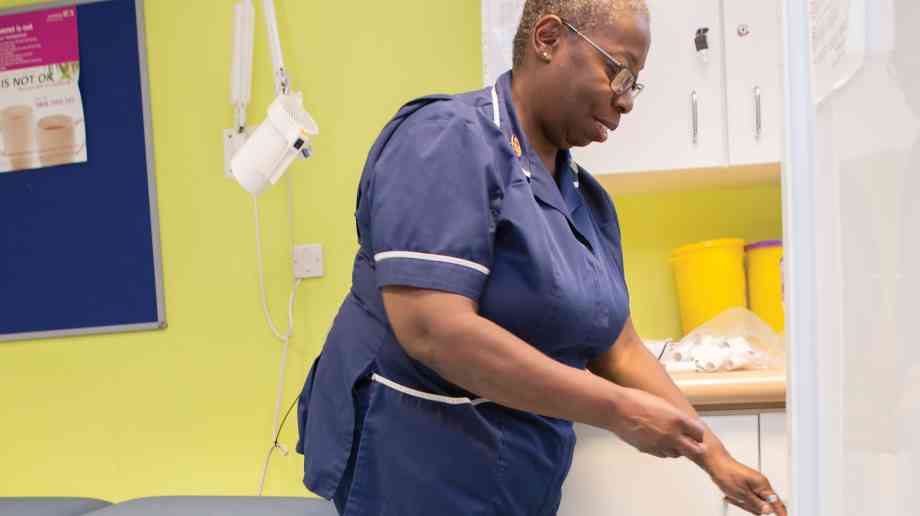
NHS England is set to expand the GP workforce with the help of an international recruitment programme, it has been revealed.
Working with partners it will start to recruit roughly 600 overseas doctors into general practice in 2017/18 with a goal of a total of at least 2,000 doctors over the next three years. This is in comparison to the initial target of 500 doctors by 2020/21.
The decision to increase international GP recruitment was announced by NHS England chief executive Simon Stevens in July.
NHS England is now calling for recruitment firms to join a framework to support the programme, with the publication of a tender on the Official Journal of the European Union (OJEU).
NHS England has also announced the establishment of a GP International Recruitment Office to organise and run the sealed up programme operation. It will coordinate the recruitment, support for, and relocation of recruited doctors, working closely with regional and local colleagues and partner organisations.
The scheme will initially focus on doctors in the European Economic Area, whose GP training is recognised in the UK under European law and already get automatic recognition to join the General Medical Council’s (GMC) GP Register.
The Royal College of Practitioners (RCGP), working with the GMC, will review the curriculum, training and assessment processes for GPs trained outside the European Economic Area (EEA), beginning with Australia, to identify whether we can streamline the GP registration process for those doctors whose training is seen as equivalent to the UK programme.
This will help to deliver the commitment set out in the General Practice Forward View action plan that will see 5,000 more GPs and 5,000 more medics working in general practice by 2020, when an extra £2.4 billion will be spent on general practice each year - a 14 per cent real terms rise.
Over the coming years the intake into medical schools in England will grow by 25 per cent, but it will be some time before that expanded pipeline of UK doctors is available to enter GPs. In the meantime international recruitment will help. Around a fifth of existing GPs are international medical gradates, so even with these new international recruitment lans, the proportion of UK-trained GPs is set to increase.
Doctors will be expected to meet the highest standards of practice including being able to speak good English and support will be in place to ensure this as well as being offered help with the relocation of their families.
The following principles will help with the recruiting of doctors online: patient safety being paramount; being bound by the World Health Organisation Global Code of Practice on the International Recruitment of Health Personnel; looking to attract UK-trained doctors back to the UK wherever possible; making sure UK-trained doctors are not disadvantaged as a result of the programme; targeting countries where there is likely to be the best chance of affordable supply; and continuing efforts and activity on the work to improve the attractiveness and experience of being a GP in England.
Arvind Madan, GP and NHS England director of primary care, said: “Most new GPs will continue to be trained in this country, and general practice will benefit from the 25 per cent increase in medical school places over the coming years. But the NHS has a proud history of ethically employing international medical professionals, with one in five GPs currently coming from overseas. This scheme will deliver new recruits to help improve services for patients and reduce some of the pressure on hard working GPs across the country.”
Helen Stokes-Lampard, chair of the RCGP, said: “We welcome any GP from the EU or further afield who wants to work in UK general practice – as long as they meet the rigorous standards set by the College, General Medical Council and others to ensure safe clinical practice – to contribute to delivering care to over one million patients every day. Indeed, thousands of GPs from overseas already work alongside UK GPs, and we are incredibly grateful for their skills and expertise.
“We need the pledges in NHS England’s GP Forward View, including £2.4 billion extra a year for general practice and 5,000 more full-time equivalent GPs by 2020, delivered as a matter of urgency so that we can continue to keep our patients safe now and for years to come – we hope this scheme goes a long way to achieving this, and look forward to working with NHS England and others to make it a success.”
Latest News

16/02/2024 - 12:56
Hammersmith and Fulham Council has created a new alliance intended to clean dirty air and improve residents' health.

16/02/2024 - 10:44
Two million more GP appointments a month are being delivered for patients compared to the same month before the pandemic as part of the NHS primary care access recovery plan according to new NHS data.

15/02/2024 - 10:26
The Welsh Government has provided innovation funding of £380,000 to support two projects utilising technology in domiciliary care.

15/02/2024 - 10:13
The new Scottish health secretary has met with frontline staff at Queen Elizabeth University Hospital in Glasgow.

14/02/2024 - 10:27
The North East London NHS Foundation Trust (NELFT) has appointed three new Executive Directors to the Trust Board.
Product Features

UK Building Regulations highlight toxic gas and smoke from layers of paint built up over multiple redecorations as a major cause of permanent ill health or death in a building fire.
Their concern rose with discovery the flame retardant paints most widely used paint along escape routes have been ones which to this day counter-productively use emission of heavy toxic gas to smother flames which rapidly spread along walls if layers of paint delaminate in a fire.
Supplier Profiles

Northwich’s Victoria Infirmary (VIN) Community Diagnostic Centre (CDC) has enabled more patients

Adveco, the commercial hot water specialist, announces the launch of live metering of domestic ho
Latest Features

Sarah Greenslade, public affairs and communications officer at the British Parking Association looks at some of the problems and innovations in healthcare parking

It’s easy to assume that the comms team is there to handle press enquiries and the occasional social media storm – but the reality is that strategic communications can make a measurable impact across the entire organisation, from operational to financial, when done properly


