
This story was first published in digitalhealth.net

NHS Louisa Jordan to close at end of the month
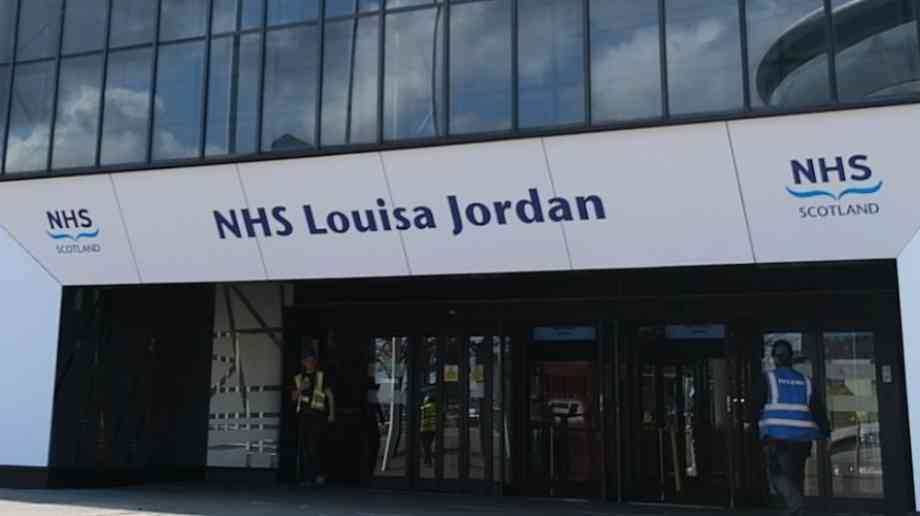
NHS Louisa Jordan, set up to support Scotland’s response to the coronavirus pandemic, is to close on 31 March, with the mass vaccination centre relocating to The SSE Hydro.
Thanks to the public’s continued efforts to reduce the spread of the virus, the NHS Louisa Jordan was not required to treat coronavirus patients. Instead, since July 2020 the hospital has played a crucial role in supporting the remobilisation of NHS Scotland.
With NHS services remobilising across the country, NHS staff at the Louisa Jordan will return to their own health boards or support the vaccination programme at The SSE Hydro. The Scottish Events Campus will be returned to a working events and conference centre, including preparing to host COP26.
By 31 March staff at the hospital will have carried out more than 32,000 outpatient and diagnostic appointments, trained over 6,900 healthcare staff and students, and vaccinated approximately 175,000 people across the Greater Glasgow and Clyde area. The site has also supported the Scottish Blood Transfusion Service, with over 500 donations being carried out, as well as providing Occupational Health services for the University of Glasgow for nearly 1,000 people.
Once relocated to The SSE Hydro, the centre will continue to run daily clinics with the ability to administer a minimum of 4,000 vaccinations each day, with capacity to scale up to 10,000.
Health Secretary Jeane Freeman said: “I want to thank everyone who has supported the establishment of NHS Louisa Jordan. From the contractors involved in the building work, to the support staff who have worked throughout and the staff who have treated patients and administered Covid vaccinations, each one of them has played a vitally important role in helping to protect our NHS and save lives.
“We said from the start that this facility has a vital part of our Covid-19 contingency planning but we hoped it would not be needed to treat COVID patients. Thanks to the continued efforts of the public, we have been able to maintain capacity in our hospitals across the country and use this facility to remobilise health services and treat patients whose healthcare had to be cancelled last year due to Covid. Since July 2020 staff at the Louisa Jordan have treated more than 32,000 patients, trained over 6,900 healthcare staff and students, and, more recently, supported the delivery of our vaccination programme with about 175,000 vaccinations since December.
“As we work our way through the JCVI vaccination priority list and begin to vaccinate more people across the country, we have secured use of the Hydro, located in the Scottish Events Campus, to ensure we can continue to vaccinate people as quickly as supplies allow. I want to repeat my thanks to all of our NHS staff working to protect and treat those of us who need it and to everyone who is complying with the necessary restrictions in place. It is because of that continued support that we are able to move forward and see light at the end of the tunnel.”
The total cost of NHS Louisa Jordan, including building work, operational costs and decommissioning, is expected to be in the region of £70 million which is in line with forecasted costs.
Latest News

16/02/2024 - 12:56
Hammersmith and Fulham Council has created a new alliance intended to clean dirty air and improve residents' health.

16/02/2024 - 10:44
Two million more GP appointments a month are being delivered for patients compared to the same month before the pandemic as part of the NHS primary care access recovery plan according to new NHS data.

15/02/2024 - 10:26
The Welsh Government has provided innovation funding of £380,000 to support two projects utilising technology in domiciliary care.

15/02/2024 - 10:13
The new Scottish health secretary has met with frontline staff at Queen Elizabeth University Hospital in Glasgow.

14/02/2024 - 10:27
The North East London NHS Foundation Trust (NELFT) has appointed three new Executive Directors to the Trust Board.
Product Features

UK Building Regulations highlight toxic gas and smoke from layers of paint built up over multiple redecorations as a major cause of permanent ill health or death in a building fire.
Their concern rose with discovery the flame retardant paints most widely used paint along escape routes have been ones which to this day counter-productively use emission of heavy toxic gas to smother flames which rapidly spread along walls if layers of paint delaminate in a fire.
Supplier Profiles

Northwich’s Victoria Infirmary (VIN) Community Diagnostic Centre (CDC) has enabled more patients

Adveco, the commercial hot water specialist, announces the launch of live metering of domestic ho
Latest Features

Sarah Greenslade, public affairs and communications officer at the British Parking Association looks at some of the problems and innovations in healthcare parking

It’s easy to assume that the comms team is there to handle press enquiries and the occasional social media storm – but the reality is that strategic communications can make a measurable impact across the entire organisation, from operational to financial, when done properly


