
This story was first published in digitalhealth.net

£1.36m to support greener vehicles across NHS Scotland
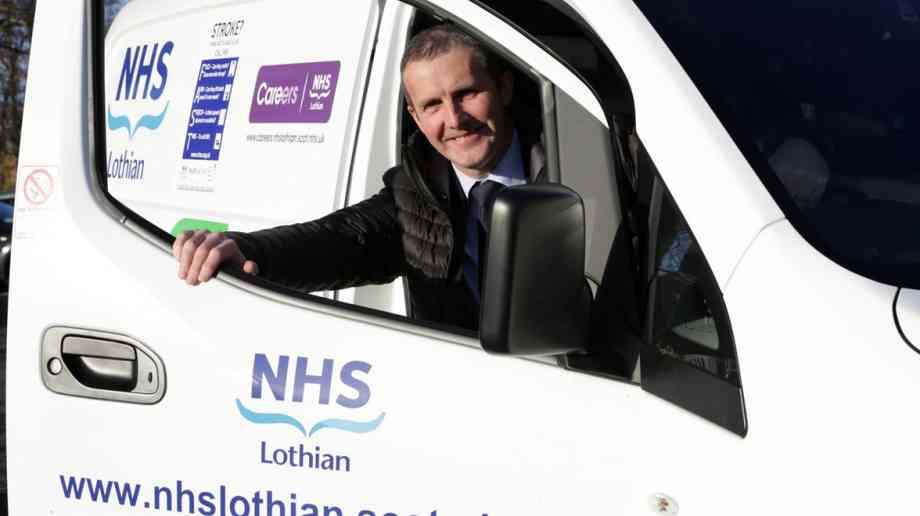
NHS Scotland has accessed £1.36 million of available support through the Transport Scotland Switched on Fleets Fund for 112 new electric cars.
This will increase the number of Ultra-Low Emission vehicles in the NHS shared service fleet by almost 80 per cent, replacing existing fossil fuelled vehicles across a number of NHS shared service functions and regions, reducing the CO2 equivalent tailpipe emissions by at least 168 tonnes every year by comparison.
Michael Matheson, Cabinet Secretary for Transport, Infrastructure and Connectivity, said: “NHS Scotland is demonstrating leadership by moving at an incredible pace in taking steps to improve air quality and reduce carbon emissions through their plans to decarbonise their vehicle fleet. The 2019 Programme for Government outlined our commitment to phase out the need for new petrol or diesel cars in the public sector fleet by 2025 and for all other vehicles in the public sector fleet by 2030.
“This decision by the NHS directly supports that ambition and responds to the climate emergency, supporting our Climate Change Plan and our vision for Scotland’s air quality to be the best in Europe – and builds on the activity already undertaken by the Scottish Ambulance Service. I’m pleased we can support public sector leadership by providing support through the Scottish Government Switched on Fleets Fund which exists to help local authorities and public organisations, like the NHS and Scottish Ambulance Service, to make the important transition to greener, zero-emission vehicle fleets.”
Shelley MacKay, national fleet manager for NHS National Services Scotland, added: "We have worked closely with manufacturers to ensure that this new fleet of electric vehicles delivers best value for the NHS and for Scotland. We will continue to support the Scottish Government and work with Transport Scotland, and other partners, to achieve our shared ambition of a cleaner, greener transport future."
Latest News

16/02/2024 - 12:56
Hammersmith and Fulham Council has created a new alliance intended to clean dirty air and improve residents' health.

16/02/2024 - 10:44
Two million more GP appointments a month are being delivered for patients compared to the same month before the pandemic as part of the NHS primary care access recovery plan according to new NHS data.

15/02/2024 - 10:26
The Welsh Government has provided innovation funding of £380,000 to support two projects utilising technology in domiciliary care.

15/02/2024 - 10:13
The new Scottish health secretary has met with frontline staff at Queen Elizabeth University Hospital in Glasgow.

14/02/2024 - 10:27
The North East London NHS Foundation Trust (NELFT) has appointed three new Executive Directors to the Trust Board.
Product Features

UK Building Regulations highlight toxic gas and smoke from layers of paint built up over multiple redecorations as a major cause of permanent ill health or death in a building fire.
Their concern rose with discovery the flame retardant paints most widely used paint along escape routes have been ones which to this day counter-productively use emission of heavy toxic gas to smother flames which rapidly spread along walls if layers of paint delaminate in a fire.
Supplier Profiles

Northwich’s Victoria Infirmary (VIN) Community Diagnostic Centre (CDC) has enabled more patients

Adveco, the commercial hot water specialist, announces the launch of live metering of domestic ho
Latest Features

Sarah Greenslade, public affairs and communications officer at the British Parking Association looks at some of the problems and innovations in healthcare parking

It’s easy to assume that the comms team is there to handle press enquiries and the occasional social media storm – but the reality is that strategic communications can make a measurable impact across the entire organisation, from operational to financial, when done properly


