
This story was first published in digitalhealth.net

Point-of-care scanning in the NHS improves patient safety
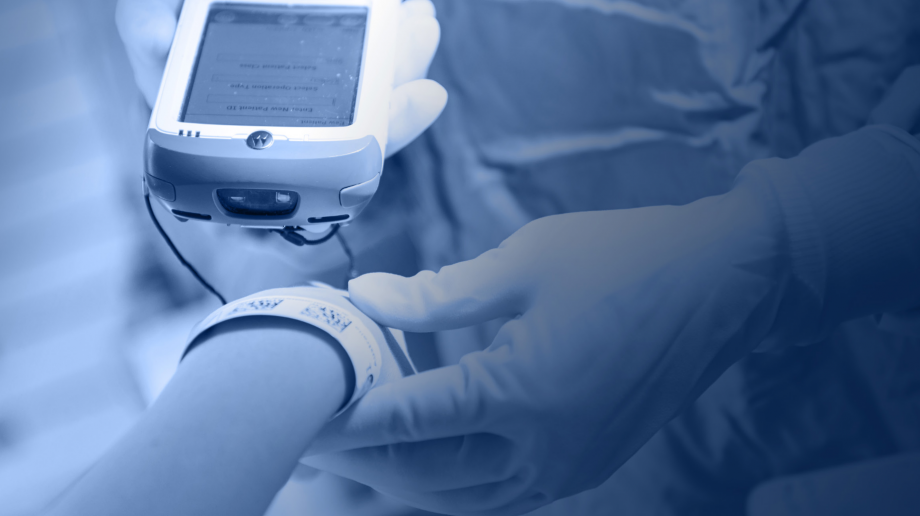
A new report has revealed that six NHS hospital trusts which implemented regular point-of-care scanning have ensured complete traceability of healthcare items while securing millions of pounds of savings and releasing thousands of hours of clinical time.
A scan of the benefits: the Scan4Safety evidence report details the results at hospital trusts that took part in a national two-year programme, known as Scan4Safety, to investigate the benefits of point-of-care barcode scanning in the NHS. It shows that the six Scan4Safety demonstrator sites increased efficiency while significantly bolstering patient safety – including by being able to accurately track and share details of which patients have been given which treatments and implants, an ability deemed of crucial importance by the recent Independent Medicines and Medical Device Safety Review led by Baroness Julia Cumberlege.
Among the results across all six trusts during the two years of the Scan4Safety demonstrator programme: 140,000 hours of clinical time released back to care for patients; recurrent inventory savings worth nearly £5 million; and non-recurrent inventory reductions amounting to £9 million.
The report highlights a number key results at individual organisations. By introducing scanning in pharmacy, Royal Cornwall Hospitals NHS Trust reduced prevented error rates by 76 per cent including elimination of all errors caused by wrong patient, wrong drug, wrong dose and wrong form. By December 2018, University Hospitals of Derby and Burton NHS Foundation Trust had realised cumulative benefits of £3,194,346 thanks to Scan4Safety. At Leeds Teaching Hospitals NHS Trust, the average time taken to recall a product has fallen from 8.33 days to less than 35 minutes following Scan4Safety.
Meanwhile, at North Tees and Hartlepool Hospital NHS Trust scanning a nasogastric tube before inserting in a patient, displays a patient safety alert detailing the potential risks. Once the tube has been placed, the clinician is also required to confirm a pH test has been conducted – this is a key indicator of whether the tube is in the right place and thus helps eliminate the risk of a Never Event.
As the Cumberlege review of medicines and medical devices has recently shown, it has traditionally been difficult to know which product has been used on which patient at which time. At Scan4Safety trusts, however, there is full visibility of what care has been given to which patient, when and where. Patients have a barcode on their wristband which is scanned before a procedure. All equipment then used for the procedure – including implantable medical devices – is scanned before use and recorded against that patient.
The location in which a procedure takes place also has a barcode which is scanned and, at some trusts, staff have barcodes on their badges. This makes it possible to know which members of the team were involved in which procedures.
Since items are scanned the minute they go into stock, hospitals with Scan4Safety also have a much clearer picture of what equipment they have available where. This means more informed inventory management, reduced risk of items going out of date, and clinical staff freed from time consuming stock management duties.
Lord David Prior, chair of NHS England, said: “Barcodes are commonplace in most industries and been around for a long time. It is time they became commonplace in the NHS. They offer traceability, efficiency savings and greater patient safety. We live in a world in which digital technology has already fundamentally changed the banking industry, the retail industry, and many others. It offers a similar opportunity in healthcare. Barcodes are a small but essential part of that revolution. We need to embrace it, now!”
Julian Hartley, chief executive of Leeds Teaching Hospitals NHS Trust, added: “Scan4Safety is a pioneering initiative to bring 21st century data standards to our everyday work in the NHS. I’m proud that at Leeds Teaching Hospitals, we were one of the original demonstrator sites and it has shown improvements in how we track patients and equipment around our seven hospitals, and, crucially, frees up staff time so they can spend more time focusing on patient care. Initiatives such as Scan4Safety are crucial for becoming an efficient, modern teaching hospital.”
Glen Hodgson, head of healthcare at GS1 UK, commented: “This report fully details the evidence from the Scan4Safety demonstrator programme. It highlights the improvements made to patient safety and financial efficiency by enabling traceability in a clinical setting through the unambiguous identification of every person, every product, and every place. It provides a compelling case for the implementation of point-of-care scanning across the NHS, particularly as we consider how to learn from the difficult lessons arising from the Cumberlege review.”
Latest News

16/02/2024 - 12:56
Hammersmith and Fulham Council has created a new alliance intended to clean dirty air and improve residents' health.

16/02/2024 - 10:44
Two million more GP appointments a month are being delivered for patients compared to the same month before the pandemic as part of the NHS primary care access recovery plan according to new NHS data.

15/02/2024 - 10:26
The Welsh Government has provided innovation funding of £380,000 to support two projects utilising technology in domiciliary care.

15/02/2024 - 10:13
The new Scottish health secretary has met with frontline staff at Queen Elizabeth University Hospital in Glasgow.

14/02/2024 - 10:27
The North East London NHS Foundation Trust (NELFT) has appointed three new Executive Directors to the Trust Board.
Product Features

UK Building Regulations highlight toxic gas and smoke from layers of paint built up over multiple redecorations as a major cause of permanent ill health or death in a building fire.
Their concern rose with discovery the flame retardant paints most widely used paint along escape routes have been ones which to this day counter-productively use emission of heavy toxic gas to smother flames which rapidly spread along walls if layers of paint delaminate in a fire.
Supplier Profiles

Northwich’s Victoria Infirmary (VIN) Community Diagnostic Centre (CDC) has enabled more patients

Adveco, the commercial hot water specialist, announces the launch of live metering of domestic ho
Latest Features

Sarah Greenslade, public affairs and communications officer at the British Parking Association looks at some of the problems and innovations in healthcare parking

It’s easy to assume that the comms team is there to handle press enquiries and the occasional social media storm – but the reality is that strategic communications can make a measurable impact across the entire organisation, from operational to financial, when done properly


