
This story was first published in digitalhealth.net

RCEM report shows 'staggering' A&E waiting times
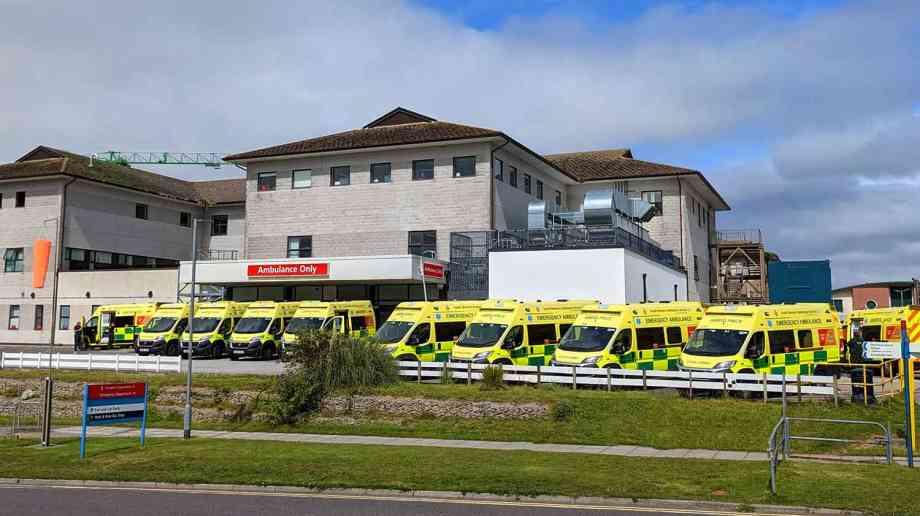
The Royal College of Emergency Medicine (RCEM) has released figures showing that in 2021 some 1,047 patients a day, on average, were waiting 12 hours or longer from their time of arrival.
The College sent Freedom of Information requests to 118 hospital trusts (with 74 responses) in England to discover how many patients had waited 12 hours or longer from their time of arrival at an emergency department.
At the responding trusts, 381,991 patients (4.3 per cent) experienced a 12-hour delay from their time of arrival in the department in 2021.
The College raised concerns over “alarming” levels of patients in emergency departments as it described current data on 12-hour waits as the “tip of the iceberg”.
Dr Adrian Boyle, vice president of the RCEM, called for the 12-hour data measured from time of arrival to be published alongside monthly NHS performance figures.
He said: “These figures are staggering and show the critical state of the urgent and emergency care system.
“They also make clear that measuring 12-hour waits from decision to admit masks the reality facing patients and staff.
“Clearly, it is misleading to measure 12-hour waits in this way, and it is detrimental to staff efforts to improve A&E waiting times.”
Wendy Preston, Royal College of Nursing's head of nursing practice, said:
“This is yet more evidence that emergency services are in disarray.
“The health and care workforce crisis is at the heart of this – there simply aren’t enough staff to provide the services needed and patient safety has never been at a greater risk, not to mention poor patient experience.”
Rory Deighton, acute lead at the NHS Confederation, said:
“These findings reveal just how strained, under-staffed and under-pressure emergency departments have been.
“While the situation has slightly improved thanks to the hard work of NHS staff, the timeliness of care in emergency departments still falls short of what the public should expect.
“The NHS is currently carrying 105,000 staff vacancies and the system remains under real pressure so we urgently need the Government to commit to producing a fully funded NHS workforce plan.
“These staffing gaps combined with severe staff shortages in social care mean the NHS is facing an uphill struggle to resolve long waits and improve the flow of patients through hospitals.”
Latest News

16/02/2024 - 12:56
Hammersmith and Fulham Council has created a new alliance intended to clean dirty air and improve residents' health.

16/02/2024 - 10:44
Two million more GP appointments a month are being delivered for patients compared to the same month before the pandemic as part of the NHS primary care access recovery plan according to new NHS data.

15/02/2024 - 10:26
The Welsh Government has provided innovation funding of £380,000 to support two projects utilising technology in domiciliary care.

15/02/2024 - 10:13
The new Scottish health secretary has met with frontline staff at Queen Elizabeth University Hospital in Glasgow.

14/02/2024 - 10:27
The North East London NHS Foundation Trust (NELFT) has appointed three new Executive Directors to the Trust Board.
Product Features

UK Building Regulations highlight toxic gas and smoke from layers of paint built up over multiple redecorations as a major cause of permanent ill health or death in a building fire.
Their concern rose with discovery the flame retardant paints most widely used paint along escape routes have been ones which to this day counter-productively use emission of heavy toxic gas to smother flames which rapidly spread along walls if layers of paint delaminate in a fire.
Supplier Profiles

Northwich’s Victoria Infirmary (VIN) Community Diagnostic Centre (CDC) has enabled more patients

Adveco, the commercial hot water specialist, announces the launch of live metering of domestic ho
Latest Features

Sarah Greenslade, public affairs and communications officer at the British Parking Association looks at some of the problems and innovations in healthcare parking

It’s easy to assume that the comms team is there to handle press enquiries and the occasional social media storm – but the reality is that strategic communications can make a measurable impact across the entire organisation, from operational to financial, when done properly


