
This story was first published in digitalhealth.net

Patients could soon be diagnosed by artificial intelligence, NHS leaders say
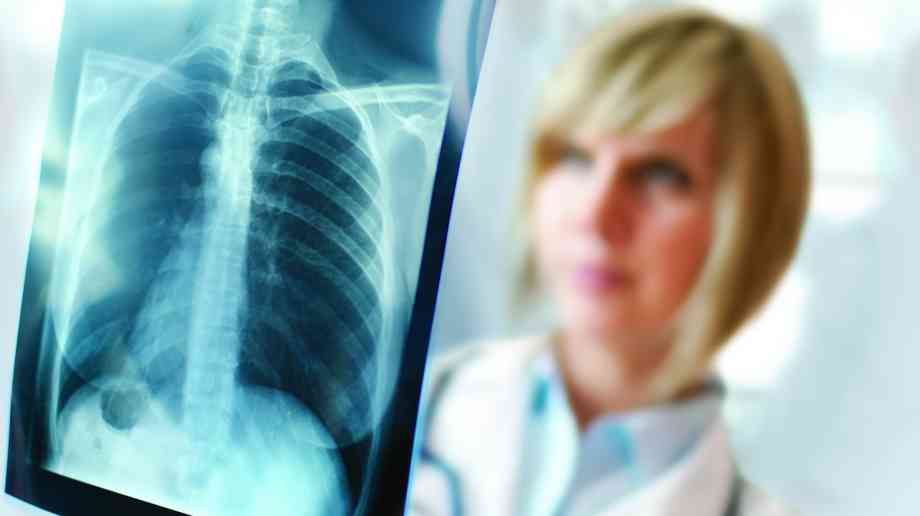
Computers may soon be able to read X-rays and analyse diseased tissue, the NHS’s top doctor has said.
Artificial intelligence (AI) could potentially mean doctors will be replaced by machines within the next few years.
NHS England plans to invest more of its £120 billion budget in AI to speed up its application to the mental health service, especially in analysing huge amounts of information collected from patients about their symptoms.
AI is already being used around the world in machines that can help identify patients who have autism or Alzheimer’s disease.
Bruce Keogh, NHS England’s National Medical Director, said: “We know from a number of studies that have been done that in, certain circumstances, AI is better than doctors at diagnosing certain conditions.
“It’s possible that certain types – and there are many different types of AI – will be able to read X-rays. I’ve been told by people who are developing this sort of stuff that’s within a four-year timeframe. We also know that this kind of approach can be used for reading histopathology slides.
“All of this takes us into very new territory and it’s not a long way over there, it’s actually here now.”
Simon Stevens, NHS chief executive, said: “We have a great opportunity to get smarter about the way we are using AI and machine learning with datasets to improve the quality of clinical care.
“The Lancet pointed out that over the course of a career a radiologist would probably read over 10 million images, a dermatologist might analyse over 200,000 skin lesions and a pathologist will review nearly 100,000 specimens – whereas there is great potential to actually automate huge swathes of what is actually happening in radiology and to some extent pathology and dermatology.”
Jeremy Hunt, Health Secretary, told the NHS expo that computers could be routinely diagnosing health conditions even before they display symptoms by the time NHS turns 80 in 2028.
Hunt said: “The changes in medical innovation are likely to transform humanity by as much in the next 25 years as the internet has in the last 25 years.
“So what might medicine look like when the NHS is 80? Well the first thing is we may well not be going to doctors for a diagnosis, we might be going to computers instead, who will be looking at the 300,000 biomarkers in every single drop of blood, mashing that with big data information about everyone else’s biomarkers.
“When we do go to a doctor, he or she may be comparing your medical record with our fully sequenced genome and giving us much more accurate predictive information.
“We may be in a world where if we show any symptoms of a disease we consider that a sign of failure – because the name of the game will be to catch diseases when we are asymptomatic and we have a much better chance of being able to nip illness in the bud.”
Latest News

16/02/2024 - 12:56
Hammersmith and Fulham Council has created a new alliance intended to clean dirty air and improve residents' health.

16/02/2024 - 10:44
Two million more GP appointments a month are being delivered for patients compared to the same month before the pandemic as part of the NHS primary care access recovery plan according to new NHS data.

15/02/2024 - 10:26
The Welsh Government has provided innovation funding of £380,000 to support two projects utilising technology in domiciliary care.

15/02/2024 - 10:13
The new Scottish health secretary has met with frontline staff at Queen Elizabeth University Hospital in Glasgow.

14/02/2024 - 10:27
The North East London NHS Foundation Trust (NELFT) has appointed three new Executive Directors to the Trust Board.
Product Features

UK Building Regulations highlight toxic gas and smoke from layers of paint built up over multiple redecorations as a major cause of permanent ill health or death in a building fire.
Their concern rose with discovery the flame retardant paints most widely used paint along escape routes have been ones which to this day counter-productively use emission of heavy toxic gas to smother flames which rapidly spread along walls if layers of paint delaminate in a fire.
Supplier Profiles

Northwich’s Victoria Infirmary (VIN) Community Diagnostic Centre (CDC) has enabled more patients

Adveco, the commercial hot water specialist, announces the launch of live metering of domestic ho
Latest Features

Sarah Greenslade, public affairs and communications officer at the British Parking Association looks at some of the problems and innovations in healthcare parking

It’s easy to assume that the comms team is there to handle press enquiries and the occasional social media storm – but the reality is that strategic communications can make a measurable impact across the entire organisation, from operational to financial, when done properly


