
This story was first published in digitalhealth.net

Committee of MPs criticise lockdown delay
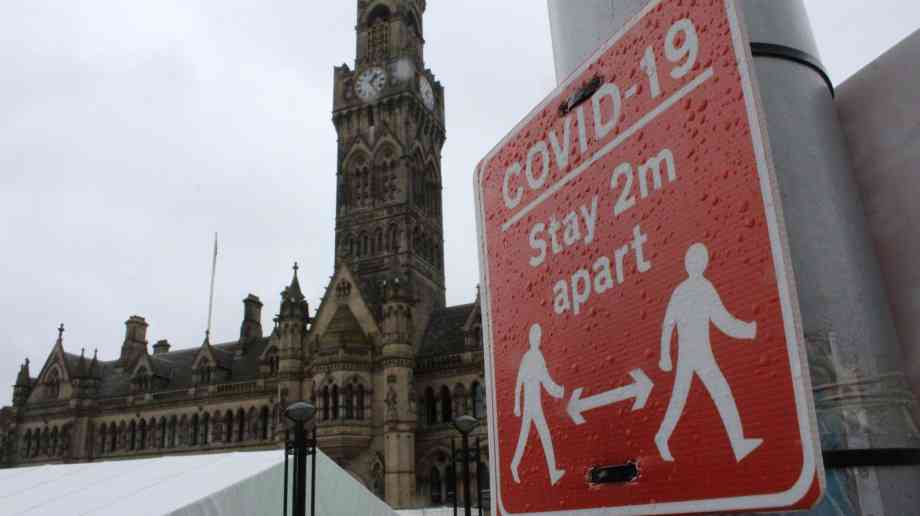
The House of Commons and Science and Technology Committee and Health and Social Care Committee have jointly stated that the UK's failure to do more to stop coronavirus spreading early in the pandemic was one of the worst ever public health failures.
The joint inquiry, which began in October 2020, examined six key areas of the response to coronavirus, including the country's preparedness for a pandemic, social distancing and lockdowns to control the pandemic, and the impact of the pandemic on social care.
The inquiry concluded that some initiatives were examples of global best practice but others represented mistakes.
On the former, MPs say that the forward-planning, agility and decisive organisation of the vaccine development and deployment effort will save millions of lives globally and should be a guide to future government practice.
On the latter, the committee stressed that the delays in establishing an adequate test, trace and isolate system hampered efforts to understand and contain the outbreak and it failed in its stated purpose to avoid lockdowns. Furthermore, and most crucially, the initial decision to delay a comprehensive lockdown—despite practice elsewhere in the world—reflected a fatalism about the spread of the virus that should have been robustly challenged at the time.
MPs also argue that social care was not given sufficient priority in the early stages of the pandemic and that the experience of the covid pandemic underlines the need for an urgent and long term strategy to tackle health inequalities.
Jeremy Hunt, chair of the Health and Social Care Committee, and Greg Clark, chair of the Science and Technology Committee, said in joint statement: "The UK response has combined some big achievements with some big mistakes. It is vital to learn from both to ensure that we perform as best as we possibly can during the remainder of the pandemic and in the future.
“Our vaccine programme was boldly planned and effectively executed. Our test and trace programme took too long to become effective. The government took seriously scientific advice but there should have been more challenge from all to the early UK consensus that delayed a more comprehensive lockdown when countries like South Korea showed a different approach was possible.
“In responding to an emergency, when much is unknown, it is impossible to get everything right. We record our gratitude to all those—NHS and care workers, scientists, officials in national and local government, workers in our public services and in private businesses and millions of volunteers—who responded to the challenge with dedication, compassion and hard work to help the whole nation at one of our darkest times.”
Latest News

16/02/2024 - 12:56
Hammersmith and Fulham Council has created a new alliance intended to clean dirty air and improve residents' health.

16/02/2024 - 10:44
Two million more GP appointments a month are being delivered for patients compared to the same month before the pandemic as part of the NHS primary care access recovery plan according to new NHS data.

15/02/2024 - 10:26
The Welsh Government has provided innovation funding of £380,000 to support two projects utilising technology in domiciliary care.

15/02/2024 - 10:13
The new Scottish health secretary has met with frontline staff at Queen Elizabeth University Hospital in Glasgow.

14/02/2024 - 10:27
The North East London NHS Foundation Trust (NELFT) has appointed three new Executive Directors to the Trust Board.
Product Features

UK Building Regulations highlight toxic gas and smoke from layers of paint built up over multiple redecorations as a major cause of permanent ill health or death in a building fire.
Their concern rose with discovery the flame retardant paints most widely used paint along escape routes have been ones which to this day counter-productively use emission of heavy toxic gas to smother flames which rapidly spread along walls if layers of paint delaminate in a fire.
Supplier Profiles

Northwich’s Victoria Infirmary (VIN) Community Diagnostic Centre (CDC) has enabled more patients

Adveco, the commercial hot water specialist, announces the launch of live metering of domestic ho
Latest Features

Sarah Greenslade, public affairs and communications officer at the British Parking Association looks at some of the problems and innovations in healthcare parking

It’s easy to assume that the comms team is there to handle press enquiries and the occasional social media storm – but the reality is that strategic communications can make a measurable impact across the entire organisation, from operational to financial, when done properly


