
This story was first published in digitalhealth.net

Stockpiling issues undermined coronavirus PPE distribution
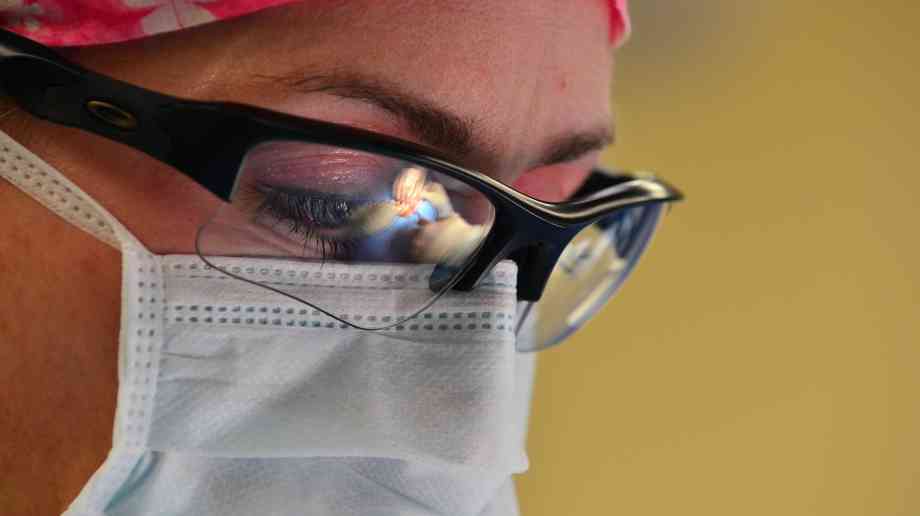
The National Audit Office has revealed that the government’s plan to distribute personal protective equipment (PPE) during the coronavirus pandemic was undermined because officials failed to stockpile gowns and visors despite warnings to do so.
The report seeks to examine the readiness of the NHS and social care in England for the pandemic alongside the government’s response to the pandemic since Chris Whitty, the chief medical adviser, confirmed the first cases of coronavirus on 31 January. This is despite the New and Emerging Respiratory Virus Threats Advisory Group (Nervtag) recommending in June 2019 that Public Health England should stockpile gowns and switch from glasses to visors when glasses next required reordering.
Research reveals that Public Health England had 41,500 pairs of gloves, 25,700 pairs of eye protectors, and 156,000 facemasks in February. The report claims that, by the end of April, none of these items were left. This was down to the Department of Health and Social Care operating on ‘just in time’ procurement and manufacturing principles.
The spending watchdog’s report claims that less than half of the expected pieces of certain equipment were handed out to frontline workers as the crisis developed. In actual fact, the only categories of PPE that increased in volume in the government’s stockpile between 24 January and 21 February, when ministers were acutely aware of the pandemic in China, were aprons and clinical waste bags.
The NAO findings also confirm that 25,000 hospital patients were discharged to care homes at the height of the pandemic before testing became routine. Initially, NHS England and NHS Improvement advice was to urgently discharge from hospital ‘all patients medically fit to leave’ in order to free up bed space for coronavirus patients. One in three homes for the elderly suffered coronavirus outbreaks. The advice was then changed in mid-April, but more than 1,000 homes were by then dealing with positive cases during the peak of infections in April.
Gareth Davies, the head of NAO, said: "This report demonstrates the enormous efforts of staff across health and social care to respond at speed to the unprecedented challenge of the COVID-19 pandemic. While we have not sought to evaluate government’s response in this report, our work raises some important considerations.
“The speed and nature of the response in health and social care has been shaped by longstanding differences between the sectors and ongoing financial pressures. Government’s ability to increase beds, ventilators, PPE and testing has varied in part because of the number of other bodies, both national and international, with which it has had to engage. All of these issues need to be taken into account as government plans for the later phases of the pandemic and future emergencies.”
Jeremy Hunt, chair of the Health and Social Care Committee said: “The figures released by the NAO today confirm that 25,000 patients were discharged into care homes without being tested at the height of the epidemic. Whilst the impact of such discharges meant the NHS was never short of beds or ventilators it seems extraordinary that no one appeared to consider the clinical risk to care homes despite widespread knowledge that the virus could be carried asymptomatically. Places like Germany and Hong Kong took measures to protect their care homes that we did not over a critical four week period.”
Latest News

16/02/2024 - 12:56
Hammersmith and Fulham Council has created a new alliance intended to clean dirty air and improve residents' health.

16/02/2024 - 10:44
Two million more GP appointments a month are being delivered for patients compared to the same month before the pandemic as part of the NHS primary care access recovery plan according to new NHS data.

15/02/2024 - 10:26
The Welsh Government has provided innovation funding of £380,000 to support two projects utilising technology in domiciliary care.

15/02/2024 - 10:13
The new Scottish health secretary has met with frontline staff at Queen Elizabeth University Hospital in Glasgow.

14/02/2024 - 10:27
The North East London NHS Foundation Trust (NELFT) has appointed three new Executive Directors to the Trust Board.
Product Features

UK Building Regulations highlight toxic gas and smoke from layers of paint built up over multiple redecorations as a major cause of permanent ill health or death in a building fire.
Their concern rose with discovery the flame retardant paints most widely used paint along escape routes have been ones which to this day counter-productively use emission of heavy toxic gas to smother flames which rapidly spread along walls if layers of paint delaminate in a fire.
Supplier Profiles

Northwich’s Victoria Infirmary (VIN) Community Diagnostic Centre (CDC) has enabled more patients

Adveco, the commercial hot water specialist, announces the launch of live metering of domestic ho
Latest Features

Sarah Greenslade, public affairs and communications officer at the British Parking Association looks at some of the problems and innovations in healthcare parking

It’s easy to assume that the comms team is there to handle press enquiries and the occasional social media storm – but the reality is that strategic communications can make a measurable impact across the entire organisation, from operational to financial, when done properly


