
This story was first published in digitalhealth.net

Six in ten hospital trusts launch NHS rainbow badges
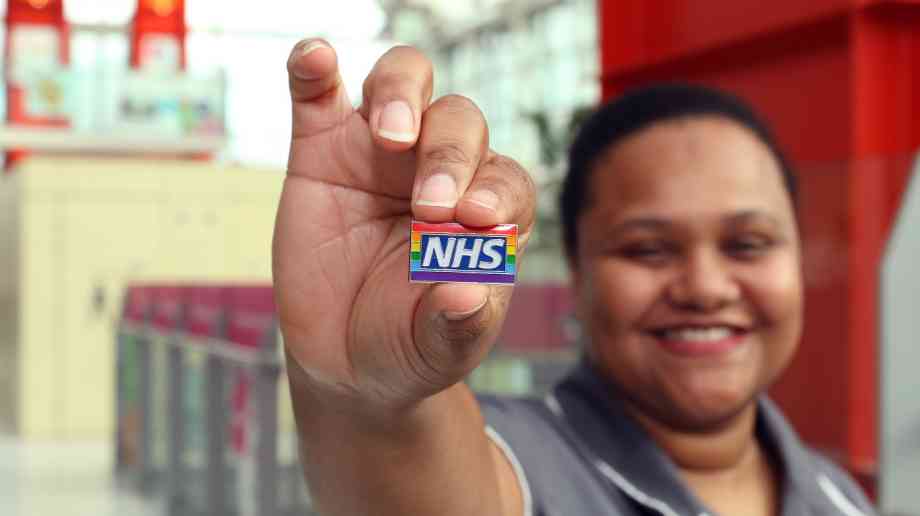
Six in ten hospital trusts in England are introducing NHS rainbow badges for their staff to support lesbian, gay, bisexual and transgender (LGBT+) patients.
Developed by Evelina London and rolled out across Guy’s and St Thomas’ in February following a successful pilot at the children’s hospital, the scheme promotes a message of inclusion and the badges are a sign that the wearer is someone you can talk to about issues of sexuality and gender identity.
Currently, more than 4,000 Guy’s and St Thomas’ staff, which includes Evelina London Children’s Hospital, are wearing the badge.
Furthermore, despite launching less than a year ago, new statistics show that 61 per cent of NHS trusts in England have launched the scheme or are planning to roll it out using a special toolkit developed by Evelina London.
A Stonewall survey found that one in seven LGBT+ people have avoided medical treatment for fear of discrimination, and almost one in four have witnessed discriminatory or negative remarks against LGBT+ people by healthcare staff.
Dr Michael Farquhar, NHS rainbow badge initiative lead, said: “Since we launched the pilot project at Evelina London a year ago, we’ve been amazed at how brilliantly people have embraced the scheme. During the pilot we developed a toolkit which can be used by any NHS Trust or organisation to launch the scheme and since we released this in February, over 60 per cent of NHS Trusts in England are using it to introduce rainbow badges to their staff.
“Despite improving social attitudes in the UK, LGBT+ people can still face significant barriers to accessing healthcare and this can have a significant impact on physical and mental health. Wearing a rainbow NHS badge is a way for our staff to show that the NHS is an open, non-judgemental and inclusive place for LGBT+ people and their families, and that we are here to listen to, and support, them if they need it.
“We are proud that the rainbow NHS badge model is a small part of helping to address those issues and we look forward to building on what we have already achieved, including working with Dr Michael Brady, National Advisor for LGBT Health, and those delivering the NHS England LGBT+ Action Plan, over the next year to continue to be part of the solution.”
Latest News

16/02/2024 - 12:56
Hammersmith and Fulham Council has created a new alliance intended to clean dirty air and improve residents' health.

16/02/2024 - 10:44
Two million more GP appointments a month are being delivered for patients compared to the same month before the pandemic as part of the NHS primary care access recovery plan according to new NHS data.

15/02/2024 - 10:26
The Welsh Government has provided innovation funding of £380,000 to support two projects utilising technology in domiciliary care.

15/02/2024 - 10:13
The new Scottish health secretary has met with frontline staff at Queen Elizabeth University Hospital in Glasgow.

14/02/2024 - 10:27
The North East London NHS Foundation Trust (NELFT) has appointed three new Executive Directors to the Trust Board.
Product Features

UK Building Regulations highlight toxic gas and smoke from layers of paint built up over multiple redecorations as a major cause of permanent ill health or death in a building fire.
Their concern rose with discovery the flame retardant paints most widely used paint along escape routes have been ones which to this day counter-productively use emission of heavy toxic gas to smother flames which rapidly spread along walls if layers of paint delaminate in a fire.
Supplier Profiles

Northwich’s Victoria Infirmary (VIN) Community Diagnostic Centre (CDC) has enabled more patients

Adveco, the commercial hot water specialist, announces the launch of live metering of domestic ho
Latest Features

Sarah Greenslade, public affairs and communications officer at the British Parking Association looks at some of the problems and innovations in healthcare parking

It’s easy to assume that the comms team is there to handle press enquiries and the occasional social media storm – but the reality is that strategic communications can make a measurable impact across the entire organisation, from operational to financial, when done properly


