
This story was first published in digitalhealth.net

Improvement made at Barts Health NHS Trust
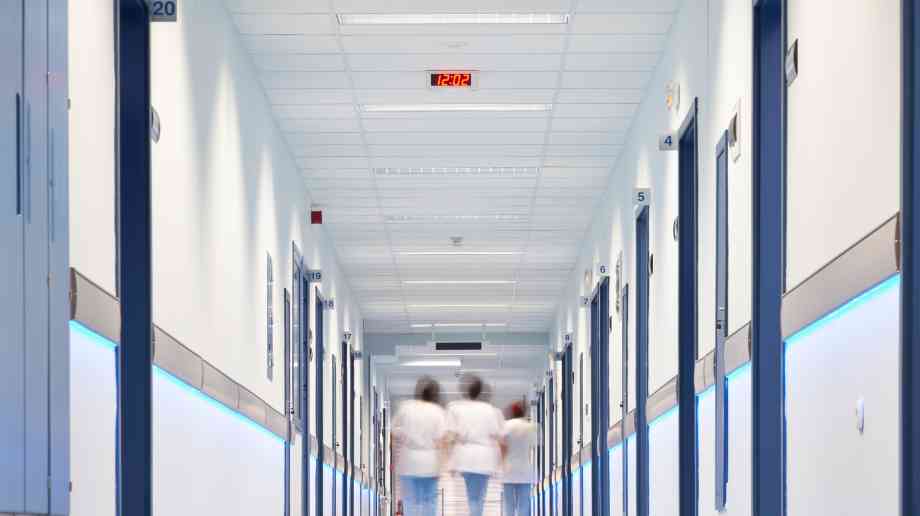
The Care Quality Commission (CQC) has rated Barts NHS Trust as ‘requires improvement’ overall - an improvement from its previous rating of ‘inadequate’.
Parts was rated ‘requires improvement’ for being safe, effective, caring, responsive, and well-led, following recent core service inspections and a review.
The inspection was designed to test the requirement for the continued application of special measures to the trust.
Prior to inspection CQC risk-assessed services provided by the trust using national and local data and intelligence received from various sources.
CQC re-inspected all core services that had received a rating of ‘inadequate’ to test whether signifiant improvements had been made.
Whips Cross University Hospital received an overall rating of ‘requires improvement’. It was rated ‘good’ for being caring, but ‘requires improvement’ for being safe, responsive and well-led.
The Royal London Hospital received an overall rating of ‘requires improvement’. Effective was rated ‘good’, and the safe, caring, responsive and well-led domains were rated ‘requires improvement’.
At St Bartholomew’s Hospital, all core services received an overall rating of ‘good’, with the well-led domain receiving an ‘outstanding’.
Newham University Hospital’s maternity services were found to ‘require improvement’ and the safe domain was rated ‘inadequate’. There were improvements in both medical care and surgery, where both services were rated ‘good’ overall.
The trust rating for well-led was ‘requires improvement’ which had improved from the previous ‘inadequate’ rating given in 2015.
Inspectors found the senior leadership team were visible and approachable, and that time and resource had been invested into improving the leadership and governance structures, risk management and culture of the organisation, including better staff engagement.
However, inspectors also found that many implemented changes remain in their infancy and are not fully embedded. CQC says there is still significant further work to do to ensure that governance is managed consistently and service improvements are achieved across all sites.
Ted Baker, Chief Inspector of Hospitals, said: “We were particularly encouraged by the improvements that have been made by the trust since our inspections of 2016. Our overall rating for the trust has improved from ‘inadequate’ to ‘requires improvement’.
“However, while surgery at Whipps Cross University Hospital remains rated as ‘inadequate’, we were encouraged by the improvements seen in a number of areas, these included: improvements in a number of the core services we inspected; improvements in governance framework of the organisation and the embedding of the site based leadership.
“There is still much to do but the trust is improving and this reflects the hard work by the leadership and the staff addressing the problems we have found.”
Latest News

16/02/2024 - 12:56
Hammersmith and Fulham Council has created a new alliance intended to clean dirty air and improve residents' health.

16/02/2024 - 10:44
Two million more GP appointments a month are being delivered for patients compared to the same month before the pandemic as part of the NHS primary care access recovery plan according to new NHS data.

15/02/2024 - 10:26
The Welsh Government has provided innovation funding of £380,000 to support two projects utilising technology in domiciliary care.

15/02/2024 - 10:13
The new Scottish health secretary has met with frontline staff at Queen Elizabeth University Hospital in Glasgow.

14/02/2024 - 10:27
The North East London NHS Foundation Trust (NELFT) has appointed three new Executive Directors to the Trust Board.
Product Features

UK Building Regulations highlight toxic gas and smoke from layers of paint built up over multiple redecorations as a major cause of permanent ill health or death in a building fire.
Their concern rose with discovery the flame retardant paints most widely used paint along escape routes have been ones which to this day counter-productively use emission of heavy toxic gas to smother flames which rapidly spread along walls if layers of paint delaminate in a fire.
Supplier Profiles

Northwich’s Victoria Infirmary (VIN) Community Diagnostic Centre (CDC) has enabled more patients

Adveco, the commercial hot water specialist, announces the launch of live metering of domestic ho
Latest Features

Sarah Greenslade, public affairs and communications officer at the British Parking Association looks at some of the problems and innovations in healthcare parking

It’s easy to assume that the comms team is there to handle press enquiries and the occasional social media storm – but the reality is that strategic communications can make a measurable impact across the entire organisation, from operational to financial, when done properly


