
This story was first published in digitalhealth.net

Space Agency backs delivery of testing kits by drone
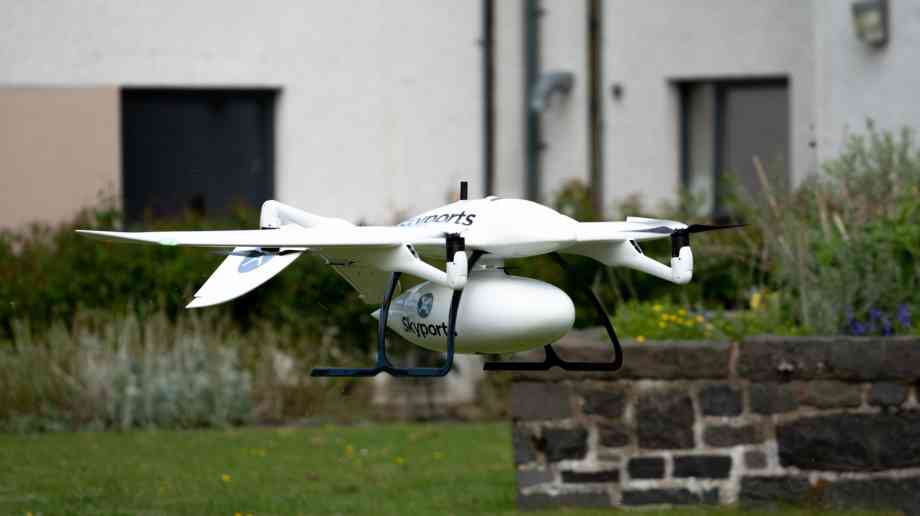
Drones delivering coronavirus test kits and technology using space data to support vulnerable people are among the projects backed by new UK Space Agency funding.
Science Minister Amanda Solloway revealed details of the three new projects that have been selected as part of a joint initiative between the UK Space Agency and the European Space Agency (ESA) to find and support space-enabled technologies and services that can support the NHS response to coronavirus.
She said that Skyports will now be working with NHS Highland, which serves a group of islands off the west coast of Scotland, to use drones to deliver medical supplies and samples from a hospital on the Argyll and Bute mainland. The drones will use mobile connectivity, satellite communications and navigation and Earth observation data to chart a course to others areas of the mainland and across the sea to nearby islands to reach medical practices in need.
Solloway said: “I’m proud of how our world-leading space sector is stepping up to provide innovative solutions to directly support our amazing NHS, as we continue our national effort to tackling coronavirus. The projects we are backing today show UK ingenuity at its finest, and will make a real difference to how we use this latest innovative technology to deliver critical healthcare now and long into the future.”
Tony Young, the NHS national clinical lead for innovation, said: “The NHS Long Term Plan is bringing new technologies into the NHS to improve patient care and save lives, and as we deal with the greatest challenge in the NHS’ history, innovation in medicine and convenient, faster technology are helping frontline staff to give people world-leading treatment for Covid-19 alongside care for killer conditions including cancer.”
The other projects receiving funding are: Landmrk Limited, based in Bristol, which will develop an app called Stay, a mobile platform for charities and organisations supporting young people’s mental health and wellbeing; and Stevenson Astrosat, based in Musselburgh, Scotland, is developing a solution, called Isolation +, which uses advanced space data analytics combined with relevant ground information, to identify ‘hidden’ vulnerable communities.
Latest News

16/02/2024 - 12:56
Hammersmith and Fulham Council has created a new alliance intended to clean dirty air and improve residents' health.

16/02/2024 - 10:44
Two million more GP appointments a month are being delivered for patients compared to the same month before the pandemic as part of the NHS primary care access recovery plan according to new NHS data.

15/02/2024 - 10:26
The Welsh Government has provided innovation funding of £380,000 to support two projects utilising technology in domiciliary care.

15/02/2024 - 10:13
The new Scottish health secretary has met with frontline staff at Queen Elizabeth University Hospital in Glasgow.

14/02/2024 - 10:27
The North East London NHS Foundation Trust (NELFT) has appointed three new Executive Directors to the Trust Board.
Product Features

UK Building Regulations highlight toxic gas and smoke from layers of paint built up over multiple redecorations as a major cause of permanent ill health or death in a building fire.
Their concern rose with discovery the flame retardant paints most widely used paint along escape routes have been ones which to this day counter-productively use emission of heavy toxic gas to smother flames which rapidly spread along walls if layers of paint delaminate in a fire.
Supplier Profiles

Northwich’s Victoria Infirmary (VIN) Community Diagnostic Centre (CDC) has enabled more patients

Adveco, the commercial hot water specialist, announces the launch of live metering of domestic ho
Latest Features

Sarah Greenslade, public affairs and communications officer at the British Parking Association looks at some of the problems and innovations in healthcare parking

It’s easy to assume that the comms team is there to handle press enquiries and the occasional social media storm – but the reality is that strategic communications can make a measurable impact across the entire organisation, from operational to financial, when done properly


