
This story was first published in digitalhealth.net

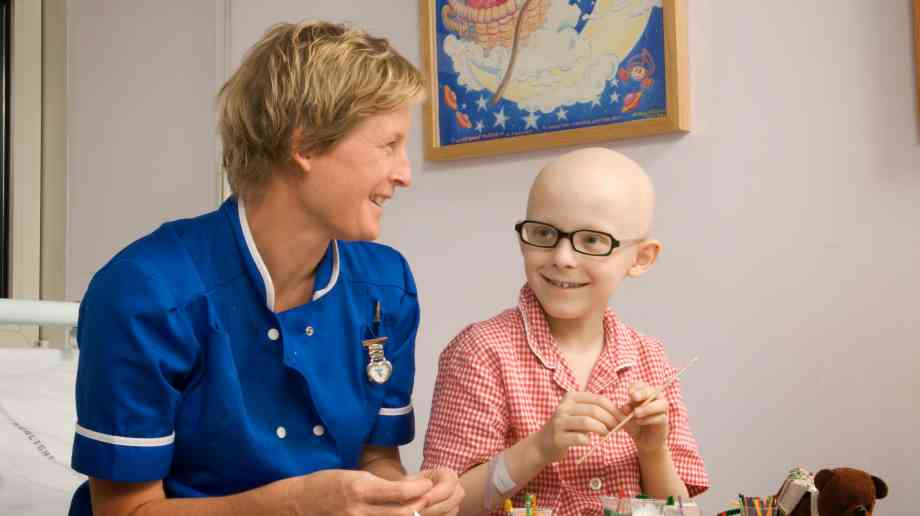
Campaign celebrates our children’s healthcare
A campaign celebrating healthcare support workers in paediatric care was launched to celebrate International Children’s Day, as part of a national programme to showcase the efforts of clinical and non-clinical support in the healthcare sector.
Launched in partnership with leading children’s hospitals from across the UK, the week-long campaign from Skills for Health and National Skills Academy for Health showcased the significant contribution that support workers make to a child’s care and their families. As part of the campaign, the public were invited to share their personal experiences and thank these staff for their contribution to health services via Twitter and Facebook.
The campaign saw the involvement of Children’s Hospitals from across the UK including Alder Hey Children’s Hospital, Great Ormond Street Hospital for Children NHS Foundation Trust, Birmingham Children’s Hospital, Sheffield Children’s NHS Foundation Trust and University Hospitals Bristol.
#OurHealthHeroes
The movement came as part of Skills for Health’s 2016 successful campaign, #OurHealthHeroes, to honour support workers across the UK who make up 40 per cent of the healthcare workforce. The #OurHealthHeroes campaign celebrates the 798,600 people across the UK health sector who work as healthcare assistants, assistant practitioners, porters, cleaners, caterers, maintenance staff and administrative staff.
Following the initial success of #OurHealthHeroes, which saw a variety of stories shared, Skills for Health identified that the campaign message had significant magnitude, resonating well with healthcare workers and healthcare trusts. Skills for Health was approached by a leading children’s hospital and was inspired to use the campaign to take a close look at the unique role of support workers in paediatric care.
Playing out on Skills for Health’s social media channels, the campaign celebrated those who work closely with children and aid in their care by sharing their stories to demonstrate the significance of the work they do and why they enjoy doing their roles at the hospitals.
Nursing assistants like Graham Tarling at Bristol Royal Hospital for Children are amongst those receiving recognition. Stationed in a short-stay surgical ward dealing with specialties including orthopaedics, general surgery, plastic surgery and scans, nursing assistant Graham works with all ages of children, from toddlers to teens.
“When the children and their families arrive onto the ward I greet them with a smile and help to put them at ease. I always talk to them regarding any fears they may have and make them as comfortable as possible.”
Although Graham has a staff role, volunteers such as Charlene James at Alder Hey Children’s Hospital are also within those being celebrated. Charlene, who has worked at the hospital for two years, spends her time supporting families with autism.
She explains: “I’ve always worked with adults in the past but I wanted to give something back to the younger generation. It’s the hardest thing in the world to have an unwell child, so it makes us proud to be able to help in any way we can.”
Play specialists
At Sheffield Children’s Hospital, the play specialists include Donna Webster-Payne, Katie Farrell and Kelly Taylor. Their hugely important role involves making children’s time in hospital as comfortable and as fun as possible.
Donna explains: “I’ve worked here for 31 years and I’m still as enthusiastic when I wake up in the morning as I was when I started. I love coming in to work every day. It is about taking children’s attention away from the procedure they are having and moving the focus to play. It makes it easier for them to cope with things. One-to-one individual time is so important for that.
“We also have the knowledge and the skills to identify children in the waiting room who are showing anxieties. If we can work with them straight away, we can avoid a situation where the child is already upset by the time they arrive in the consulting room.”
Though as Donna explained, sometimes the parents need attention too: “We also spend talking to parents and taking the time to listen to what they need. They need time and acknowledgement for both themselves and their children. They can feel like they don’t have a role when their child is having a procedure and we can help with that.”
“You don’t know what the day will bring so it is always a nice surprise,” Katie adds. “You’ve got to get stuck in, get involved!”
Graham, Charlene and the play specialists are among thousands of healthcare support workers around the UK whose roles are vital to the running of NHS services. Yet, they often go overlooked and so the campaign brought to light all those who go above and beyond within paediatric departments and children’s hospitals.
A ‘vital part of the team’
On Thursday 2nd June, Skills for Health hosted a Twitter chat session with all hospitals involved, supported by the National Skills Academy of Health. The chat saw all hospitals discussing why #OurHealthHeroes are significant to delivering patient care, with Great Ormond Street Hospital tweeting to say that they ‘are a vital part of the team, helping deliver our aim of giving patients and families the best possible care’.
Sheffield Children’s Hospital joined in the conversation to say that, for them, “support workers help deliver family-centred care. Helping them through a really challenging time.”
Melissa Swindell, interim director of human resources at Alder Hey, says: “Everyone plays their part in making Alder Hey such a special place and the importance of our non-clinical staff cannot be under-estimated. They have a huge role in what we do and it is really important that we recognise how they make a significant difference to our patients and families.”
Ian Wheeler, head of research at Skills for Health, says: “Non-clinical worker roles are critical, ensuring that hospital and healthcare practices around the UK are running efficiently and effectively. Our research has shown it is only by understanding the contribution and value of the support worker role that the health sector will be able to realise its potential in terms of productivity and efficiency.”
Further information
www.skillsforhealth.org.uk/ourhealthheroes/research
Latest News

16/02/2024 - 12:56
Hammersmith and Fulham Council has created a new alliance intended to clean dirty air and improve residents' health.

16/02/2024 - 10:44
Two million more GP appointments a month are being delivered for patients compared to the same month before the pandemic as part of the NHS primary care access recovery plan according to new NHS data.

15/02/2024 - 10:26
The Welsh Government has provided innovation funding of £380,000 to support two projects utilising technology in domiciliary care.

15/02/2024 - 10:13
The new Scottish health secretary has met with frontline staff at Queen Elizabeth University Hospital in Glasgow.

14/02/2024 - 10:27
The North East London NHS Foundation Trust (NELFT) has appointed three new Executive Directors to the Trust Board.
Product Features

UK Building Regulations highlight toxic gas and smoke from layers of paint built up over multiple redecorations as a major cause of permanent ill health or death in a building fire.
Their concern rose with discovery the flame retardant paints most widely used paint along escape routes have been ones which to this day counter-productively use emission of heavy toxic gas to smother flames which rapidly spread along walls if layers of paint delaminate in a fire.
Supplier Profiles

Northwich’s Victoria Infirmary (VIN) Community Diagnostic Centre (CDC) has enabled more patients

Adveco, the commercial hot water specialist, announces the launch of live metering of domestic ho
Latest Features

Sarah Greenslade, public affairs and communications officer at the British Parking Association looks at some of the problems and innovations in healthcare parking

It’s easy to assume that the comms team is there to handle press enquiries and the occasional social media storm – but the reality is that strategic communications can make a measurable impact across the entire organisation, from operational to financial, when done properly


